Orange Heart Emoji Meaning: What 🧡 Really Means in Texts
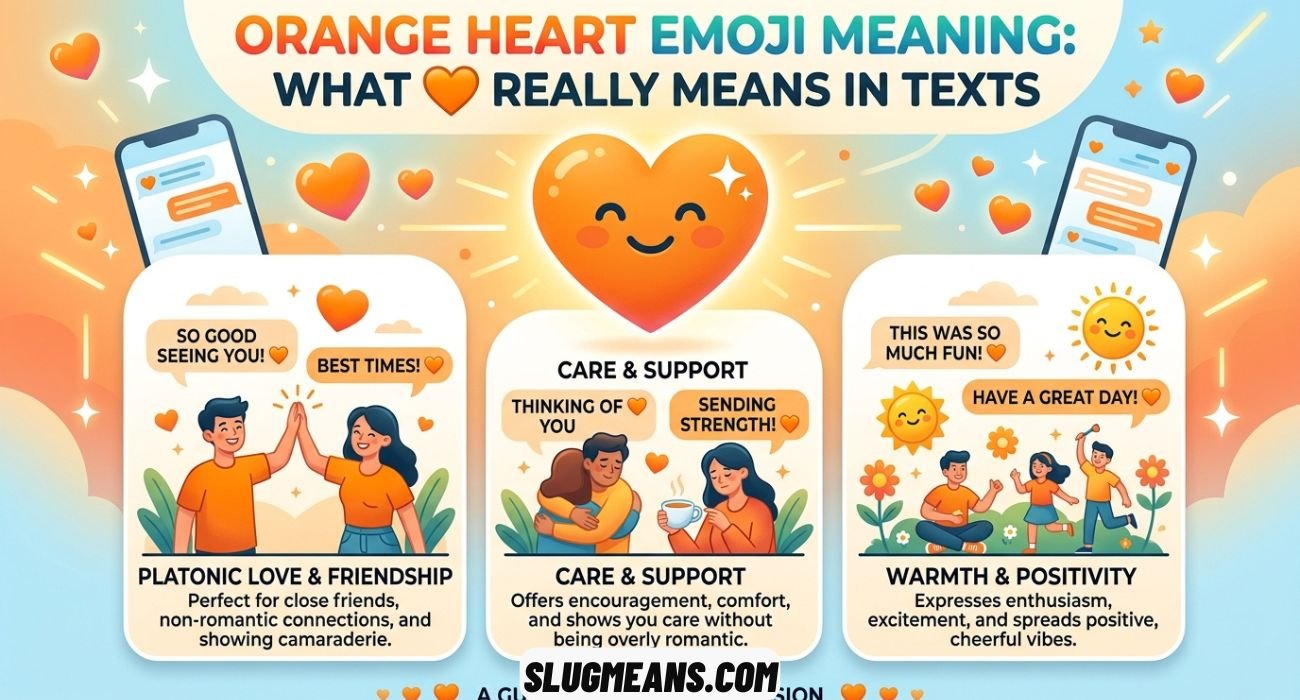
The Orange Heart Emoji Meaning is about warmth, friendship, care, and support. It usually shows kindness instead of deep romantic love. Its meaning can change based on the conversation and the person sending it.
Have you ever received a 🧡 emoji and wondered what it really means? Is it a sign of friendship, love, or something else? Understanding its meaning can help you avoid confusion in your chats.
The orange heart emoji is popular in text messages and social media. People use it to show appreciation, encouragement, and positive feelings. Knowing the Orange Heart Emoji Meaning helps you use it in the right way.
What Is the Orange Heart Emoji?
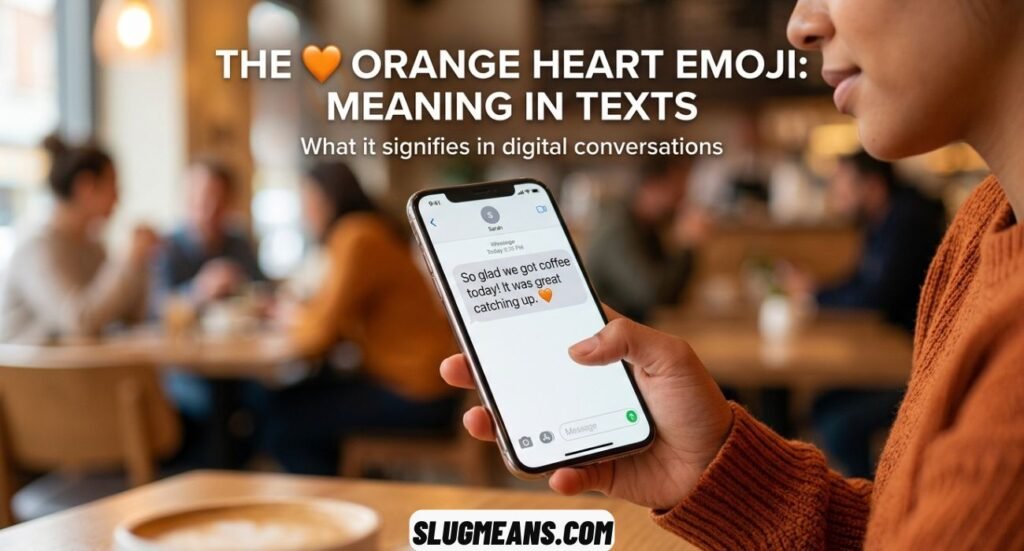
The 🧡 orange heart emoji is one of several colored heart emojis available on smartphones and social media platforms. While every heart emoji represents affection in some way, each color carries its own emotional tone.
The orange heart stands between the red heart emoji and the yellow heart emoji in terms of emotional intensity. It communicates care and closeness but usually without the deep romantic meaning associated with the red heart.
Origin of the Orange Heart Emoji
The orange heart emoji was introduced as part of Unicode 10.0 in 2017. Since then, it has been supported across major platforms, including Apple, Android, Windows, Google, Facebook, Instagram, Snapchat, TikTok, WhatsApp, and X (formerly Twitter).
Although the design varies slightly between platforms, the meaning remains generally consistent. Most people recognize it as a symbol of kindness, friendship, encouragement, and warmth.
When the Orange Heart Was Added to Unicode
The emoji became officially available in 2017 through the Unicode Standard, allowing developers to include it across operating systems and messaging apps.
As emoji use continued to grow worldwide, colored hearts became more than decorative symbols. They evolved into subtle ways of expressing emotions that words sometimes cannot capture.
Where You Can Use the Orange Heart Emoji
You can use the orange heart emoji almost anywhere digital conversations happen, including:
- Text messages
- Facebook Messenger
- Instagram comments and captions
- Snapchat chats
- TikTok comments
- Discord
- Slack
- X (Twitter)
- LinkedIn (in casual situations)
Its flexibility makes it one of the most useful heart emojis for friendly and supportive communication.
The Meaning of the Orange Heart Emoji
The orange heart emoji meaning centers on warmth, genuine affection, emotional support, positivity, and close friendships. It expresses care without carrying the strong romantic message that many people associate with the red heart.
Unlike some emojis that have one fixed meaning, the orange heart changes based on context. It can represent friendship in one conversation and quiet romantic interest in another.
What Does the Orange Heart Emoji Mean Overall?
In most situations, the orange heart communicates:
- Friendship
- Kindness
- Support
- Gratitude
- Positive energy
- Appreciation
- Emotional warmth
Because orange is often associated with optimism, enthusiasm, and creativity, the emoji naturally reflects these qualities in digital conversations.
Common Emotional Meanings
People frequently use the 🧡 emoji to:
- Show appreciation without sounding overly romantic.
- Encourage someone during a difficult time.
- Celebrate achievements.
- Express loyalty between close friends.
- Share positive emotions on social media.
For example:
“You did an amazing job today! 🧡”
Here, the emoji emphasizes encouragement and genuine happiness rather than romantic affection.
Why It’s Different From Other Heart Emojis
Each heart emoji meaning carries a different emotional tone.
| Emoji | Common Meaning | Emotional Intensity |
| ❤️ Red Heart | Romantic love, deep affection | Very High |
| 🩷 Pink Heart | Sweet affection, admiration | High |
| 💛 Yellow Heart | Happiness, friendship | Medium |
| 🧡 Orange Heart | Warmth, support, friendship, appreciation | Medium |
| 💚 Green Heart | Nature, health, growth, jealousy (sometimes) | Medium |
| 💙 Blue Heart | Trust, loyalty, stability | Medium |
| 💜 Purple Heart | Compassion, luxury, admiration | Medium |
The orange heart fills the emotional space between friendship and romance, making it ideal when you want to express care without sending mixed signals.
1. Friendship and Warmth
One of the strongest meanings behind the 🧡 emoji is friendship. Many people use it to show they value someone deeply without implying romantic feelings.
Showing Close Friendship
Close friends often exchange orange hearts to celebrate birthdays, congratulate achievements, or simply remind each other they care.
For example:
“Thanks for always being there for me. 🧡”
The message feels heartfelt while remaining comfortably platonic.
Using the orange heart instead of the red heart can help avoid confusion, especially in friendships where emotional support is common.
Expressing Care Without Romance
Not every expression of affection has to be romantic. The orange heart emoji meaning is perfect when you want to show kindness, appreciation, or emotional closeness without suggesting love.
Parents may send it to their children.
Teachers may use it when congratulating students on accomplishments.
Coworkers might include it in informal team chats after completing a successful project.
In each case, the emoji communicates encouragement rather than romance.
Everyday Examples
Here are a few common situations where the orange heart feels natural:
- “Hope your interview goes well! 🧡”
- “I’m proud of everything you’ve achieved. 🧡”
- “Have an amazing weekend! 🧡”
- “Thanks for your help today. 🧡”
These examples demonstrate why many people see it as the emoji of warmth and genuine appreciation.
2. Support and Encouragement
Another important orange heart emoji meaning is emotional support. It reassures someone that they’re not alone and reminds them that others care.
Sending Comfort During Difficult Times
When someone experiences stress, illness, or disappointment, words alone may not feel enough. Adding an orange heart softens the message and shows sincere compassion.
For example:
“Take care of yourself. Everything will be okay. 🧡”
The emoji adds emotional warmth without becoming overly sentimental.
Celebrating Achievements
People also use the orange heart to recognize milestones, including:
- Graduations
- New jobs
- Promotions
- Fitness goals
- Personal achievements
- Creative projects
It expresses happiness for someone else’s success while maintaining a friendly tone.
Motivational Uses in Conversations
Content creators, coaches, teachers, and community leaders often use orange hearts because they encourage positivity.
Examples include:
- “Keep going—you’ve got this! 🧡”
- “Believe in yourself every day. 🧡”
- “Your hard work will pay off. 🧡”
Because orange is commonly associated with confidence and enthusiasm, the emoji naturally complements motivational messages.
3. Ambiguous Romantic Signal
Although the orange heart usually represents friendship, it can sometimes carry romantic undertones.
Can the Orange Heart Mean Love?
Yes—but usually not deep romantic love.
Someone may choose the orange heart when they want to express affection without appearing too serious. It can be a gentle way of testing emotional interest before using more romantic symbols like the red or pink heart.
For example:
“I had such a great time with you today. 🧡”
Depending on the relationship, this could simply mean appreciation—or it might hint at growing feelings.
When Someone Is Testing Romantic Interest
Early in a relationship, people often avoid using the red heart because it may feel too intense.
Instead, they might send:
- 🧡
- 😊
- ✨
- 🥰
These combinations express affection while leaving room for interpretation.
If the conversations become more personal and the orange heart appears regularly, it may indicate increasing emotional closeness.
Differences Between 🧡 and ❤️
The biggest distinction is emotional intensity.
The red heart almost always signals love or deep romantic affection.
The orange heart, on the other hand, suggests:
- Caring
- Appreciation
- Emotional warmth
- Friendship
- Gentle affection
That’s why many people consider it one of the safest heart emojis to use in everyday conversations.
4. Aesthetic or Branding Choice
Not every orange heart carries emotional meaning. Sometimes people use it simply because it matches a visual theme or personal style.
Fall and Autumn Themes
Orange naturally represents autumn.
During September, October, and November, many social media users include 🧡 alongside:
- Pumpkins 🎃
- Falling leaves 🍂
- Coffee ☕
- Cozy sweaters
- Thanksgiving content
Here, the emoji reflects the season rather than personal feelings.
Halloween and Seasonal Content
Brands and creators often pair the orange heart with Halloween-themed graphics, costumes, decorations, and festive campaigns.
For example:
“Happy Halloween! Stay safe and have fun! 🧡🎃”
The emoji enhances the seasonal color palette while keeping the tone cheerful.
Brand Colors and Marketing
Businesses whose logos feature orange often use the orange heart to reinforce brand identity.
It creates consistency across:
- Instagram captions
- Promotional graphics
- Customer appreciation posts
- Product launches
- Community announcements
Because orange is linked to energy and optimism, many lifestyle and wellness brands choose it to strengthen emotional connections with their audiences.
Influencer and Content Creator Usage
Lifestyle influencers, fitness coaches, travel bloggers, and creators frequently use the orange heart because it feels warm, welcoming, and positive.
Instead of appearing overly romantic, it helps build a friendly relationship with followers while maintaining an approachable personal brand.
See Also : Smirking Face Emoji Meaning: What It Really Means in Texts
Understanding the Orange Heart Emoji Meaning in Daily Chats
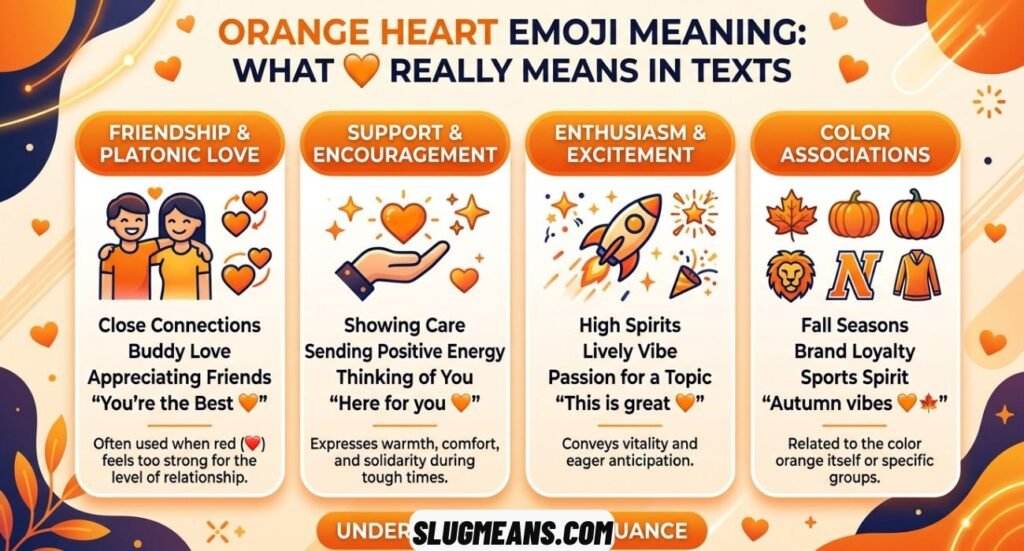
The orange heart emoji meaning becomes clearer when you look at the conversation instead of the emoji alone. The same 🧡 can express friendship in one chat, encouragement in another, or gentle affection between two people getting to know each other.
Unlike words, emojis rely heavily on context. The sender’s personality, your relationship, previous messages, and even the timing all influence what the emoji really means.
Meaning in Casual Text Messages
In everyday texting, the orange heart usually represents friendship, kindness, support, or gratitude. It adds warmth to a message without making it feel overly emotional.
For example:
“Thanks for helping me today. 🧡”
This message simply shows appreciation.
Another example:
“Drive safely and text me when you get home. 🧡”
Here, the emoji expresses care and concern rather than romantic love.
Meaning Between Friends
Close friends often use the orange heart to celebrate milestones, check on each other, or simply maintain a positive connection.
Examples include:
- “Happy birthday! Hope you have the best day ever! 🧡”
- “You’ve worked so hard—you deserve this! 🧡”
- “Miss hanging out with you! 🧡”
The emoji reinforces emotional closeness while keeping the conversation comfortably platonic.
Meaning Between Family Members
Family members also use the orange heart frequently because it communicates warmth without the romantic associations of the red heart.
Parents may send it to encourage their children before an exam.
Siblings might use it after solving a problem together.
Grandparents sometimes include it in messages wishing everyone a wonderful holiday.
In these situations, the orange heart symbolizes unconditional care and family support.
Meaning in Group Chats
Group chats often involve humor, celebrations, and encouragement. The orange heart works well because it feels friendly and inclusive.
Examples include:
- “Great teamwork today, everyone! 🧡”
- “Can’t wait for our trip next weekend! 🧡”
- “You all made my day! 🧡”
Using the orange heart in group conversations helps create a positive atmosphere without making anyone uncomfortable.
Orange Heart Emoji Meaning from a Girl
Many people wonder whether receiving an orange heart from a girl has a hidden meaning. The honest answer is that there isn’t one universal interpretation.
The orange heart emoji meaning from a girl depends far more on your relationship than on gender.
Friendly Affection
Most commonly, the orange heart shows genuine friendship and appreciation.
If she regularly uses heart emojis with friends, the orange heart is probably her way of expressing warmth and kindness.
For example:
“Thanks for always listening. 🧡”
This message usually reflects trust and appreciation.
Emotional Support
Girls often use emojis to add emotional tone to messages.
An orange heart may appear when offering encouragement:
“Everything will work out. I believe in you. 🧡”
The emoji softens the message and makes it feel more personal.
Possible Romantic Interest
Sometimes the orange heart can hint at growing romantic feelings, especially when combined with other affectionate emojis.
For example:
- 🧡🥰
- 🧡😊
- 🧡✨
If she frequently starts conversations, compliments you, and sends orange hearts consistently, the emoji could suggest emotional interest.
However, the emoji alone is not enough evidence to assume romantic intentions.
Why Context Matters More Than Gender
Every person has unique texting habits.
Some people use heart emojis with nearly everyone.
Others reserve them only for people they deeply trust.
Instead of focusing only on the orange heart, consider:
- How often they message you
- Whether conversations are personal
- Their overall tone
- Whether they use similar emojis with others
These clues provide a much more accurate understanding than the emoji by itself.
Orange Heart Emoji Meaning from a Guy
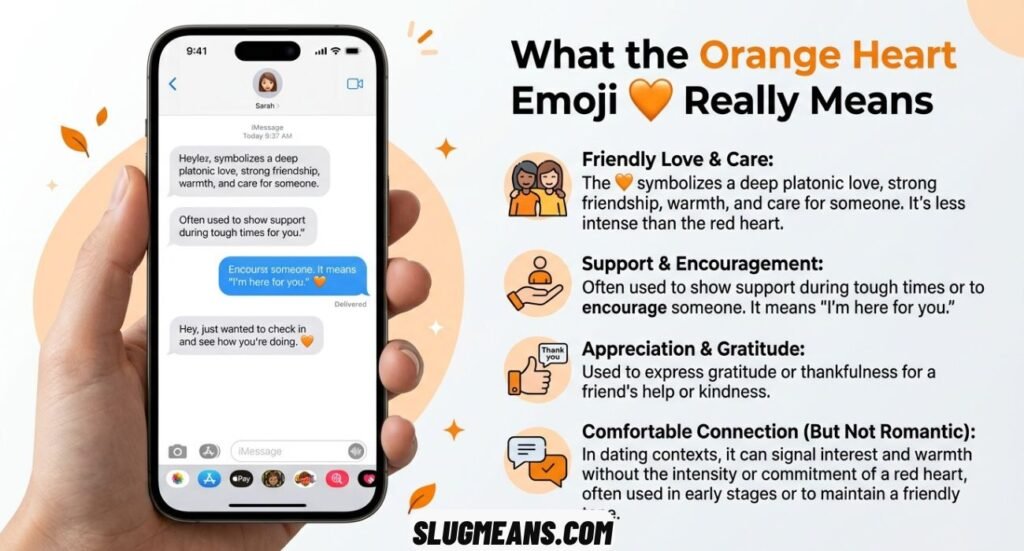
The orange heart emoji meaning from a guy can also vary depending on personality and relationship.
Many men use emojis less frequently, so when they do send one, it often carries intentional meaning.
Friendship and Respect
A guy may send an orange heart simply to express appreciation.
Examples include:
“Thanks for always having my back. 🧡”
or
“Hope your presentation goes well! 🧡”
These messages communicate support and respect.
Encouragement and Appreciation
Orange hearts frequently appear in conversations about achievements.
For example:
“I’m proud of you—you earned it. 🧡”
The emoji reinforces sincere encouragement.
Could It Indicate Romantic Feelings?
Possibly.
If the orange heart appears alongside:
- frequent compliments,
- daily conversations,
- playful flirting,
- future plans,
- affectionate language,
it may suggest that he is expressing interest carefully without becoming too direct.
Many people choose the orange heart because it feels less intense than a red heart while still communicating emotional warmth.
Common Situations
A guy may use the orange heart when:
- congratulating someone,
- checking on their well-being,
- thanking them,
- ending conversations positively,
- celebrating good news.
Looking at the complete conversation is always more reliable than interpreting one emoji in isolation.
See Also : Brown Heart Emoji Meaning: Complete Guide to Its Symbolism
How Context Changes Its Meaning
The most important rule for understanding any emoji is context.
The orange heart emoji meaning changes based on who sends it, why they send it, and the relationship involved.
Based on Your Relationship
The same emoji means different things depending on the connection.
| Relationship | Most Likely Meaning |
| Best Friend | Friendship, loyalty, appreciation |
| Family | Love and support |
| Coworker | Encouragement or congratulations |
| New Crush | Gentle romantic interest |
| Long-Term Partner | Warm affection or playful variation from ❤️ |
Relationship context should always come before emoji interpretation.
Based on Conversation Tone
Look at the messages surrounding the emoji.
For example:
“Congratulations on your promotion! 🧡”
Clearly expresses celebration.
Meanwhile:
“I’ve been thinking about you lately. 🧡”
Carries a more personal and possibly romantic tone.
The words matter just as much as the emoji itself.
Based on Other Emojis Used Together
Emoji combinations often create more specific meanings.
Some common examples include:
| Emoji Combination | Common Meaning |
| 🧡😊 | Friendly happiness |
| 🧡✨ | Positive energy |
| 🧡🙏 | Gratitude |
| 🧡🍂 | Autumn vibes |
| 🧡🥰 | Affection with possible romantic interest |
| 🧡💛 | Close friendship |
Looking at the entire emoji sequence provides stronger clues than focusing on one symbol.
Cultural and Personal Differences
Emoji meanings also vary across cultures and age groups.
Younger users may use colorful hearts casually.
Older users often reserve heart emojis for close relationships.
Some people rarely use emojis at all, making each one more meaningful.
Personal texting habits are just as important as widely accepted emoji meanings.
Emotional Psychology Behind the Orange Heart Emoji
The popularity of the orange heart is closely connected to color psychology, which studies how colors influence human emotions and behavior.
Orange combines the excitement of red with the optimism of yellow, creating a balanced emotional tone.
Why Orange Represents Warmth
Orange has long been associated with:
- warmth
- comfort
- friendliness
- enthusiasm
- hospitality
These qualities naturally transfer to the emoji, making it feel welcoming rather than overly emotional.
Energy, Optimism, and Positivity
Psychologists often connect orange with motivation and optimism.
Brands also use orange because it attracts attention while creating feelings of excitement and approachability.
When someone sends an orange heart, they often want the conversation to feel uplifting and encouraging.
Emotional Impact in Digital Communication
Research into digital communication suggests that emojis help clarify emotional intent in text-based conversations, reducing misunderstandings and making messages feel more personal.
The orange heart is especially effective because it balances affection with friendliness.
Instead of feeling overly serious, it creates emotional warmth that works in many different types of relationships.
Orange Heart Emoji in Social Media and Branding
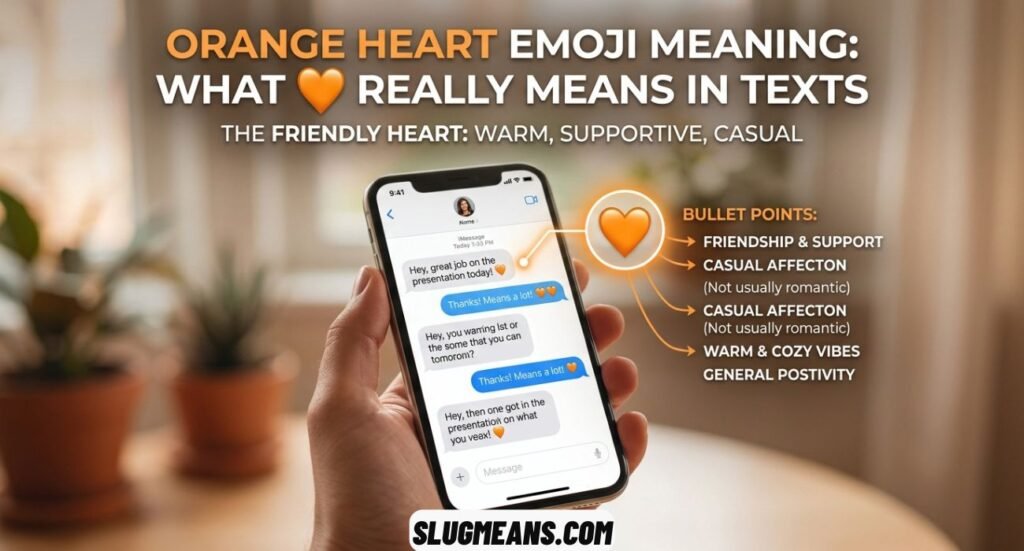
The orange heart has become increasingly popular across social media because it communicates positivity while matching many visual themes.
Its versatility makes it valuable for both individuals and businesses.
Instagram Captions
Influencers often use the orange heart alongside lifestyle, wellness, travel, fitness, and seasonal content.
Examples include:
“Grateful for every adventure. 🧡”
or
“New chapter begins today. 🧡”
The emoji reinforces an optimistic and welcoming personality.
TikTok Trends
On TikTok, creators frequently pair the orange heart with motivational videos, autumn aesthetics, self-care content, and positive storytelling.
It helps make captions feel warm and authentic.
Snapchat Conversations
Snapchat users commonly exchange orange hearts when maintaining close friendships or celebrating fun memories.
Because Snapchat emphasizes casual communication, the orange heart often reflects genuine connection rather than romance.
Facebook and X (Twitter) Usage
On Facebook and X, people use the orange heart to:
- congratulate friends,
- support charitable causes,
- react to inspirational posts,
- celebrate holidays,
- promote community events.
Businesses also use it to create a friendly, approachable brand voice.
Brand Identity and Marketing Campaigns
Many companies with orange branding naturally include the orange heart in social media campaigns.
It complements themes like:
- customer appreciation
- community support
- creativity
- innovation
- wellness
- positive lifestyles
Because orange symbolizes enthusiasm and optimism, it helps brands build stronger emotional connections with their audiences.
How to Respond to the Orange Heart Emoji
Knowing the orange heart emoji meaning is only half the conversation. The other half is knowing how to respond. Your reply should match the tone of the message and the relationship you have with the sender.
There is no single “correct” response. A thoughtful reply feels more natural than automatically sending the same emoji back.
Why Your Reply Depends on Context
Before replying, ask yourself a few simple questions:
- Is this person a close friend?
- Are they encouraging me?
- Are they flirting?
- Is this a casual social media interaction?
- Is this a professional contact?
Answering these questions makes it much easier to choose the right response.
Best Emoji Responses
If the orange heart clearly represents friendship or support, these emojis work well:
| They Sent | Good Responses | Meaning |
| 🧡 | 🧡 | Returning the same warmth |
| 🧡 | 😊 | Appreciation and kindness |
| 🧡 | 🤗 | Gratitude and support |
| 🧡 | 💛 | Close friendship |
| 🧡 | ✨ | Positivity and encouragement |
| 🧡 | 🙏 | Thankfulness |
Avoid immediately replying with ❤️ if you’re unsure of the relationship. A red heart can sometimes suggest stronger romantic feelings than intended.
Text Reply Examples
Instead of replying with only an emoji, consider adding a short message.
Examples:
- “Thank you! That really means a lot. 🧡”
- “I appreciate your support. 😊”
- “You’re the best! 🧡”
- “Thanks for always checking in.”
- “That made my day!”
A short sentence makes your response feel genuine and personal.
Mistakes to Avoid
People sometimes misunderstand emojis because they react too quickly.
Try to avoid these common mistakes:
- Assuming every heart emoji means romance.
- Overthinking a single emoji without considering the conversation.
- Responding with an overly romantic emoji if the relationship is clearly platonic.
- Ignoring the sender’s overall tone.
The safest approach is to match the emotional level of the original message.
Friendly/Platonic Situations
The orange heart is most often used between friends, classmates, teammates, and family members.
In these situations, your response should reflect appreciation rather than romance.
Best Responses Between Friends
If a friend sends:
“Hope everything goes well today! 🧡”
You could reply:
“Thank you! I really appreciate it. 🧡”
Or:
“You’re always so supportive!”
Both responses acknowledge their kindness without changing the tone of the conversation.
Emoji Combinations That Fit
Some emoji combinations work especially well for friendly conversations.
| Response | Meaning |
| 🧡😊 | Warm appreciation |
| 🧡🙌 | Celebration |
| 🧡🤗 | Emotional support |
| 🧡✨ | Positive vibes |
| 🧡🌟 | Encouragement |
These combinations keep the interaction cheerful and natural.
Sample Chat Replies
Here are a few examples you can use.
Example 1
Friend:
“Good luck on your interview! 🧡”
Reply:
“Thank you! I’ll let you know how it goes.”
Example 2
Friend:
“I’m proud of you! 🧡”
Reply:
“That means a lot. Thanks!”
Example 3
Friend:
“Have a safe trip! 🧡”
Reply:
“Thanks! I’ll text you when I arrive.”
These responses feel warm while staying comfortably platonic.
Romantic Ambiguity
Sometimes the orange heart sits somewhere between friendship and romance.
It may represent growing affection without the intensity of a red heart.
When You Like Them Back
If you’re interested in the sender, you can respond warmly while keeping things natural.
Examples include:
“Thanks! I always enjoy talking with you too. 🧡”
or
“That made me smile. 😊🧡”
These replies show interest without moving too quickly.
When You’re Unsure
If you can’t tell whether the emoji is romantic, don’t rush to conclusions.
Continue the conversation normally.
For example:
“How was your day?”
or
“That sounds fun! Tell me more.”
Over time, repeated behaviors reveal much more than one emoji ever could.
When You Want to Stay Friends
If you prefer keeping the relationship platonic, simply match the friendly tone.
Examples:
- “Thanks, friend! 🧡”
- “You’re awesome!”
- “I appreciate your support.”
There’s no need to make the interaction awkward by addressing the emoji directly.
Professional/Networking
Although the orange heart is friendly, it isn’t always appropriate in professional communication.
Understanding workplace expectations helps you decide when to use it.
Is the Orange Heart Appropriate at Work?
In most workplaces, formal emails should avoid emojis.
However, in relaxed team chats or internal messaging platforms, an orange heart may be acceptable when:
- congratulating coworkers,
- celebrating milestones,
- thanking teammates,
- recognizing achievements.
For example:
“Great presentation today! 🧡”
This feels supportive without being overly personal.
LinkedIn and Professional Messaging
On LinkedIn, emoji use should remain limited.
The orange heart works best for:
- volunteer organizations,
- nonprofit initiatives,
- wellness communities,
- creative industries.
For traditional business conversations, simple appreciation usually works better than emojis.
Safe Alternatives
If you’re unsure, replace the emoji with clear language.
Examples:
- “Congratulations!”
- “Excellent work.”
- “Thank you for your support.”
- “I appreciate your help.”
Professional communication is usually strongest when your words carry the message.
Social Media or Aesthetic Context
Not every orange heart represents emotion.
Sometimes it’s simply part of a visual style.
Responding to Story Reactions
If someone reacts to your Instagram Story with 🧡, a simple response works well.
Examples:
- “Thanks!”
- “Glad you liked it!”
- “Appreciate it! 🧡”
There’s usually no hidden meaning behind these interactions.
Influencer Interactions
Creators often send orange hearts to followers because they feel welcoming without becoming overly personal.
If an influencer replies with 🧡, it’s generally a friendly gesture toward their community rather than individual affection.
Seasonal Posts and Brand Accounts
During autumn, Halloween, and Thanksgiving, many people use orange hearts simply because they match seasonal colors.
Examples include:
- 🍂🧡
- 🎃🧡
- ☕🧡
Here, the emoji functions more as part of the design than as an emotional signal.
See Also : Best Reply to SUP and Its Meaning
How to Respond to the Orange Heart Emoji Smartly
The smartest response comes from understanding the entire conversation rather than focusing on one symbol.
Match the Sender’s Tone
People generally appreciate responses that mirror their emotional energy.
If they send:
“Congratulations! 🧡”
Replying with:
“Thank you! 🧡”
feels balanced and natural.
Don’t Overthink a Single Emoji
Many people use emojis out of habit.
Someone who sends orange hearts to everyone probably isn’t expressing secret romantic feelings.
Instead of analyzing one emoji, look for consistent patterns over time.
Consider Your Relationship
Always ask yourself:
- How long have we known each other?
- How do we usually communicate?
- Have they behaved differently recently?
- Do they use similar emojis with others?
These questions provide much more reliable answers than the emoji alone.
When to Ask for Clarification
If you’re genuinely confused and the relationship matters, open communication is always better than guessing.
For example:
“I noticed you’ve been sending me the orange heart lately. Is there a special reason?”
Most misunderstandings disappear with an honest conversation.
Expert-backed Insights on Emoji Use
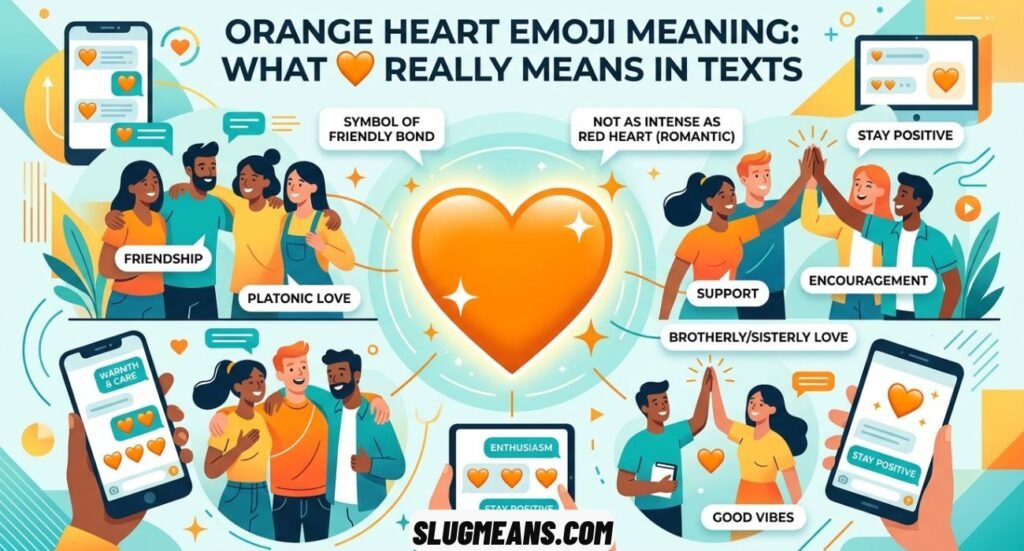
Understanding the orange heart emoji meaning becomes easier when we look at how experts study digital communication, emoji psychology, and online behavior. Researchers agree that emojis are more than colorful icons—they help people express emotions, reduce misunderstandings, and make conversations feel more personal.
While no emoji has a single universal meaning, context, relationship, and culture play the biggest roles in interpretation.
What Communication Experts Say
Communication specialists explain that emojis act as nonverbal cues in text conversations. Since people cannot hear tone of voice or see facial expressions in a message, emojis help fill that emotional gap.
For example:
“Thanks for your help.”
This message sounds polite.
Now compare it with:
“Thanks for your help! 🧡”
The orange heart immediately adds warmth, appreciation, and sincerity.
Experts recommend reading the entire message rather than focusing on one emoji because words and context always provide the clearest meaning.
How Emojis Affect Digital Conversations
Studies on online communication show that emojis can make conversations feel:
- More friendly
- More trustworthy
- More personal
- Less formal
- Easier to understand emotionally
This is one reason businesses, educators, and content creators increasingly use emojis in social media and casual communication.
However, experts also caution against using emojis in situations where clarity is critical, such as legal documents, formal contracts, or important workplace discussions.
Research on Emotional Expression Through Emojis
Research into emotional intelligence and digital messaging suggests that people often interpret heart emojis based on color rather than shape alone.
For example:
- ❤️ often represents romantic love.
- 💛 usually symbolizes happiness and friendship.
- 🧡 commonly communicates warmth, encouragement, and appreciation.
- 💙 is associated with trust and loyalty.
Although these interpretations are widely accepted, individual habits still matter. Some people use colorful hearts with nearly everyone, while others reserve them for close relationships.
Why Context Is More Important Than the Emoji Alone
The same orange heart can have different meanings in different situations.
Consider these examples:
Conversation 1
“Congratulations on your promotion! 🧡”
Meaning: Support and celebration.
Conversation 2
“I’ve been thinking about you lately. 🧡”
Meaning: Could suggest growing emotional interest.
Conversation 3
“Happy Thanksgiving! 🧡🍂”
Meaning: Seasonal greeting.
The emoji hasn’t changed—but the meaning has.
Orange Heart Emoji vs Other Heart Emojis
Many people wonder how the orange heart compares to other heart emojis. While they all express affection, each color conveys a different emotional message.
The table below highlights the most common interpretations.
| Emoji | Primary Meaning | Best Used For |
| ❤️ | Romantic love, deep affection | Partners, spouses, serious relationships |
| 🩷 | Sweet affection, admiration | Crushes, close friends, family |
| 🧡 | Friendship, warmth, encouragement | Friends, support, appreciation |
| 💛 | Happiness, joy, positivity | Best friends, cheerful messages |
| 💚 | Nature, wellness, growth | Environmental topics, healthy living |
| 💙 | Trust, loyalty, stability | Family, teamwork, dependable friendships |
| 💜 | Compassion, creativity, admiration | Support, fandoms, artistic communities |
| 🖤 | Elegance, humor, dark aesthetics | Fashion, memes, alternative style |
| 🤍 | Peace, sincerity, remembrance | Sympathy, kindness, calm emotions |
Choosing the right heart helps your message feel more authentic and avoids sending unintended signals.
🧡 Orange Heart vs ❤️ Red Heart
The red heart emoji is widely recognized as the symbol of romantic love, deep affection, and emotional commitment.
The orange heart emoji, by comparison, feels lighter and more versatile. It often represents friendship, encouragement, gratitude, and emotional warmth without implying serious romance.
If you’re unsure which to use, the orange heart is generally the safer option.
🧡 Orange Heart vs 💛 Yellow Heart
Both emojis are associated with friendship, but they carry slightly different emotional tones.
The yellow heart emoji emphasizes happiness, joy, and cheerful friendship.
The orange heart emoji adds a stronger sense of emotional support and appreciation.
Think of the yellow heart as playful and the orange heart as comforting.
🧡 Orange Heart vs 💜 Purple Heart
The purple heart emoji is often linked to compassion, admiration, luxury, creativity, and fan communities.
The orange heart feels more grounded and personal. It’s commonly used in everyday conversations between friends and family.
🧡 Orange Heart vs 🩷 Pink Heart
The pink heart emoji usually expresses sweet affection, admiration, and gentle romance.
The orange heart leans more toward appreciation and emotional support.
Someone sending a pink heart may be showing romantic interest more openly than someone sending an orange heart.
Common Orange Heart Emoji Combinations
People rarely use emojis alone. Combining emojis creates more specific meanings and makes messages more expressive.
Here are some of the most common orange heart combinations.
| Combination | Common Meaning |
| 🧡✨ | Positive energy and encouragement |
| 🧡😊 | Friendly appreciation |
| 🧡🤗 | Comfort and emotional support |
| 🧡🙏 | Gratitude and thankfulness |
| 🧡🍂 | Autumn or fall season |
| 🧡☀️ | Warm, happy feelings |
| 🧡🎉 | Celebration |
| 🧡💛 | Close friendship |
| 🧡🥰 | Affection with possible romantic interest |
| 🧡🌻 | Positivity and optimism |
These combinations make it easier to express subtle emotions that words alone may not capture.
🧡✨
This combination symbolizes encouragement, hope, and positive vibes.
Example:
“You’re going to do amazing! 🧡✨”
🧡😊
One of the most common combinations for expressing friendly appreciation.
Example:
“Thank you so much! 🧡😊”
🧡🍂
Frequently seen during autumn.
People use it in posts about:
- Fall weather
- Pumpkin patches
- Thanksgiving
- Cozy evenings
- Seasonal fashion
🧡🤍
The orange and white heart combination often represents kindness, sincerity, and peaceful affection.
It’s popular among wellness communities and inspirational content creators.
🧡🙏
This pairing communicates heartfelt gratitude.
Examples include:
“Thank you for always supporting me. 🧡🙏”
or
“I couldn’t have done it without you.”
What These Combinations Usually Mean
Emoji combinations strengthen emotional expression.
Instead of replacing words, they reinforce them.
Using combinations thoughtfully helps your messages feel more genuine while avoiding misunderstandings.
Common Misunderstandings About the Orange Heart Emoji
Although the orange heart emoji meaning is generally positive, people sometimes misinterpret it.
Understanding these misconceptions helps you avoid awkward conversations.
Assuming It’s Always Romantic
One of the biggest mistakes is believing every heart emoji represents romantic love.
The orange heart most commonly symbolizes friendship, encouragement, appreciation, and emotional warmth.
Romance is only one possible interpretation—and often not the most likely one.
Thinking Every Heart Emoji Means Love
Different heart colors communicate different emotions.
For example:
- ❤️ Love
- 🧡 Support
- 💛 Happiness
- 💙 Trust
- 💜 Compassion
Learning these differences makes digital conversations much easier to understand.
Ignoring Context
An orange heart sent by:
- your mother,
- your best friend,
- your manager,
- your favorite influencer,
will almost certainly have different meanings.
Always read the message first and interpret the emoji second.
Frequently Asked Questions (FAQs)
What does the 🧡 orange heart emoji mean?
The orange heart emoji meaning usually represents friendship, warmth, support, gratitude, and encouragement. It expresses affection without the strong romantic tone of the red heart.
Is the orange heart emoji romantic?
Sometimes, but not usually. In most conversations, it symbolizes friendship and appreciation. In certain situations, especially between two people getting to know each other, it may suggest gentle romantic interest.
What does an orange heart from a girl mean?
An orange heart from a girl often means she appreciates you, values your friendship, or wants to encourage you. If it’s paired with frequent compliments or flirtatious conversations, it could also indicate growing romantic feelings.
What does an orange heart from a guy mean?
From a guy, the orange heart generally expresses kindness, respect, appreciation, or emotional support. Like any emoji, its meaning depends on your relationship and the overall conversation.
Is the orange heart friend-zoning?
Not necessarily. While it’s commonly used between friends, it doesn’t automatically mean someone is placing you in the “friend zone.” Look at their overall behavior rather than relying on one emoji.
Conclusion
The orange heart emoji meaning goes far beyond a simple colored heart. It represents friendship, warmth, encouragement, gratitude, and genuine emotional support. Whether it’s sent by a friend, family member, coworker, or someone you’re getting to know, the orange heart usually communicates positive feelings without the intense romantic message of the red heart.
The key to understanding the 🧡 emoji is context. Consider who sent it, what they wrote, how they normally communicate, and the relationship you share. A single emoji should never be interpreted in isolation.
When used thoughtfully, the orange heart is one of the most versatile emojis in modern communication. It can brighten someone’s day, celebrate achievements, offer comfort during difficult times, and strengthen personal connections across texts and social media.
The next time you receive or send a 🧡, you’ll know that its meaning is often simple: genuine care, positive energy, and heartfelt appreciation.