
Muse Meaning Slang: Explained Simply & Clearly 2026
Muse Meaning Slang refers to using the word muse in a modern and casual way. It means a person, thing, or moment that inspires feelings or creativity. People use it often in texting and online chats.
Muse Meaning Slang appears everywhere online today. You may see it in captions, messages, or comments. It feels emotional, creative, and easy to use.
Muse Meaning Slang is common in social media and daily talk. It helps people express admiration and inspiration. Many young people use it to share feelings simply and clearly.
What Does Muse Mean in Slang?
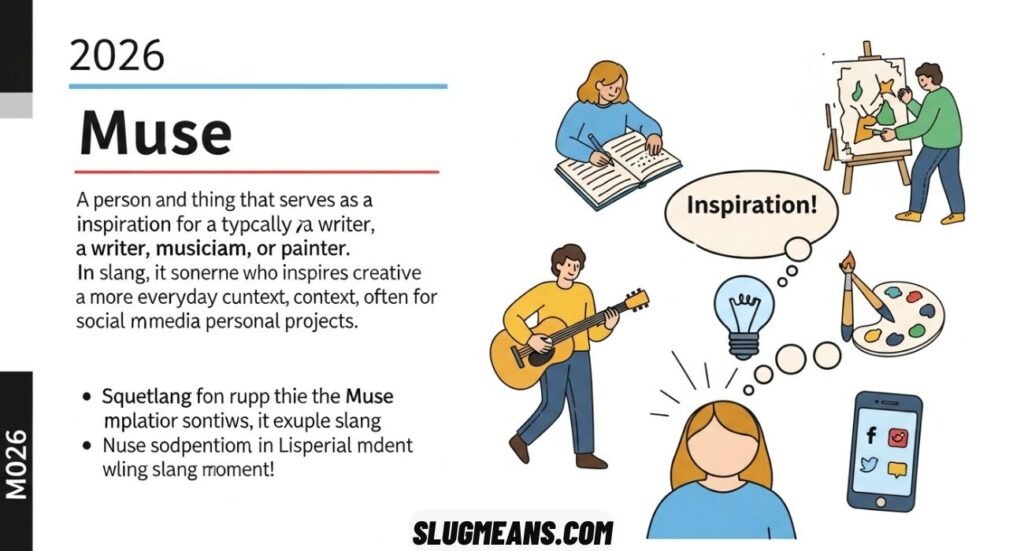
To understand what does muse mean in slang, think of inspiration mixed with admiration. In modern slang, a muse is a person, thing, or moment that sparks feelings, creativity, motivation, or attraction. The muse slang definition is much more relaxed than the traditional meaning. People use it casually to describe someone they admire or something that gives them good emotional or creative energy.
In everyday conversations, muse meaning in text often shows affection, excitement, or appreciation. Someone might say a friend, crush, song, outfit, or even a place is their muse. This reflects muse meaning modern slang, where the word is emotional, expressive, and personal rather than formal or academic. Online, muse meaning online usually connects to aesthetics, vibes, and inspiration, especially among younger users.
Key Characteristics of Muse in Slang
The slang use of muse has a few clear features that make it different from older meanings. First, it is deeply emotional. Whether romantic or platonic, it always carries positive feeling. Second, it is expressive and fits naturally into casual texting slang. Third, it is flexible, because it can describe people, objects, or experiences.
In American digital culture, muse meaning Gen Z often blends creativity with identity. People use the word to express how something makes them feel rather than to explain it logically. This is why muse slang usage feels natural on social media and in informal speech. It belongs to the world of modern slang terms, where emotion matters more than strict definitions.
Origins of Muse
The word muse comes from ancient Greek culture, where the Muses were goddesses of art, poetry, music, and knowledge. Historically, a muse was a powerful source of creative inspiration meaning, usually connected to artists and thinkers. Over time, the word moved from academic and artistic settings into everyday speech.
As the internet grew, people started using old words in new ways. Through memes, captions, and online creativity, muse slowly became part of internet slang explained. Social platforms helped shorten and soften its meaning, turning it into slang for inspiration that anyone could use. Today, it fits perfectly among other social media slang words that focus on feelings, vibes, and identity.
Muse vs Traditional Meaning
The difference between traditional and slang usage is important. Traditionally, muse referred to a deep and serious source of artistic guidance. In contrast, slang usage is lighter, faster, and more emotional. The table below shows this clearly.
| Usage Type | Meaning | Example |
| Traditional muse | Artistic or intellectual inspiration | The painter found his muse in nature |
| Slang muse | Someone or something inspiring or attractive | She’s my muse |
| Verb form | To think deeply | I muse about life sometimes |
In slang, muse informal meaning focuses less on art theory and more on emotional connection. This makes muse as slang term easier to use in everyday life.
How to Use Muse in Slang
Using muse in slang depends on context and tone. Americans often use it naturally in friendly, creative, or emotional situations. It works best when the speaker feels admiration, excitement, or inspiration. Muse used casually sounds warm and expressive, never serious or professional. Below are the main ways people use it today
1. Referring to a Person
One of the most common uses involves people. Calling someone a muse means they inspire you emotionally, creatively, or romantically. This could be a crush, partner, friend, or even a public figure. In muse meaning texting, this often appears as a compliment that feels deeper than “cute” or “cool.”
In American slang culture, this overlaps with romantic slang terms and admiration slang, but muse does not always mean love. Sometimes it simply means someone motivates or inspires you in a positive way.
2. Describing Objects or Experiences
Muse is not limited to people. Music, fashion, travel, food, and places can all be described using muse. This is where phrases like muse vibes meaning and muse energy slang come from. When someone says a song or moment is “muse energy,” they mean it creates strong emotional or creative feelings.
This usage connects closely to aesthetic slang words and vibe slang meaning, which focus on mood rather than logic. It is common in lifestyle content and creative communities.
3. Expressing Admiration or Crushes
Muse is often used when feelings are strong but subtle. Instead of directly saying “I like you,” people may use muse to express admiration. This fits well into casual texting slang, where emotions are shared softly and stylishly.
Among younger Americans, this blends with Gen Z slang meanings, where indirect expression feels cooler and more authentic. Muse allows people to show appreciation without sounding too serious.
Muse in Social Media
On platforms like Instagram and TikTok, muse is everywhere. Muse meaning Instagram often appears in captions that highlight beauty, fashion, or lifestyle moments. On TikTok, muse meaning TikTok is linked to creativity, self-expression, and mood-based content.
In these spaces, muse meaning on social media connects strongly with visuals. Photos, videos, and music become muses because they tell stories without words. This reflects how muse meaning online has evolved into a visual and emotional concept rather than a written one.
Similar Slang Terms to Muse
Muse belongs to a family of related slang words. These include inspo slang, vibes, iconic, and crush. While these words are similar, muse feels more personal and emotional. It suggests an ongoing feeling rather than a quick reaction, which is why it stands out among trendy slang words 2026.
Muse in Pop Culture
Pop culture has helped normalize muse as slang. Artists, influencers, and creators often refer to people or moments as their muse. This reinforces the word’s emotional meaning and spreads it across music, fashion, and digital art communities.
Because pop culture influences muse in everyday language, the term feels natural even to people who are not artists. It has become part of shared cultural expression in the U.S.
Creative Examples of Muse Usage
Real-life examples show how flexible muse is. Someone might say a coffee shop is their muse because it helps them think. Another person may call a friend their muse because they feel supported and inspired. In all cases, muse communicates connection and emotion without needing explanation.
This flexibility makes it one of the most useful inspiration slang terms today.
Common Mistakes With Muse
A common mistake is overusing muse, which can make it lose impact. Another mistake is assuming it is always romantic. In reality, muse can be creative, emotional, or aesthetic. People also misuse it in professional writing, where slang feels out of place.
Understanding muse meaning modern slang helps avoid these issues and keeps communication natural.
Muse as a Descriptor
Muse is often used like an adjective in slang. Phrases like muse vibes or muse energy describe feelings rather than objects. This shows how flexible the word has become in informal speech.
As a descriptor, muse adds emotion and personality, which is why it fits perfectly into muse informal meaning and modern online language.
Quotes Featuring Muse
“A muse isn’t just inspiration, it’s the feeling that makes ordinary moments unforgettable.”
This quote captures how muse connects emotion, creativity, and admiration in modern slang. It explains why the word feels so powerful even when used casually.
See Also : Kink Meaning Slang: Complete Guide for 2026
Why Muse Became Popular in Modern Slang
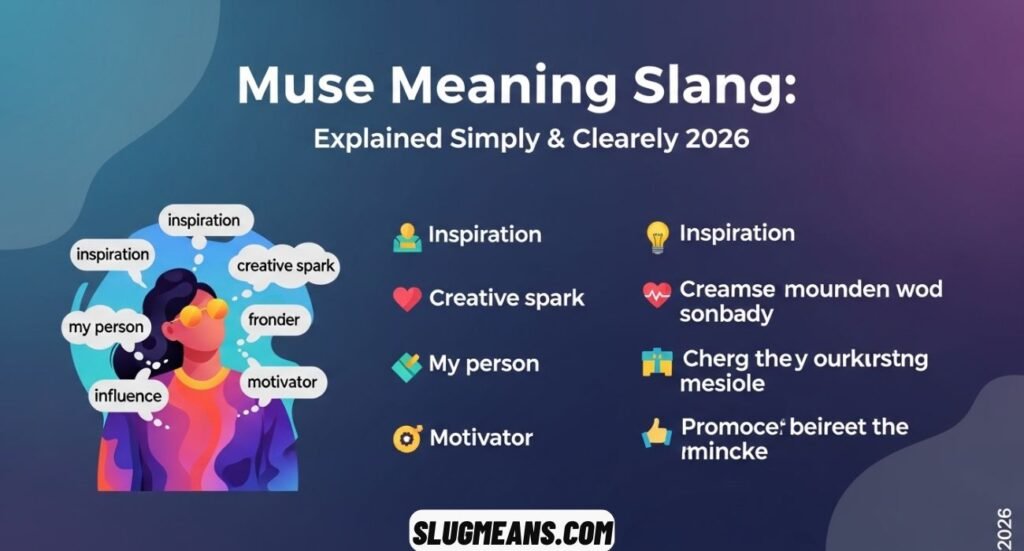
The rise of muse meaning slang is closely linked to how people express emotions online today. Social media encourages short but meaningful language, and muse fits perfectly into this style. It allows people to describe inspiration, admiration, and feelings without long explanations, which is ideal for fast digital communication.
In modern slang culture, especially in the USA, people want words that feel emotional yet stylish. That is why muse slang meaning feels more personal than words like inspiration or admiration. It sounds creative, warm, and expressive, making it popular among younger users.
Muse Meaning Slang in Everyday Conversations
In daily conversations, what does muse mean in slang often depends on tone and context. Friends may use it to describe someone who motivates them emotionally or creatively. It can be playful, meaningful, or affectionate without sounding too serious or dramatic.
This flexibility helps muse meaning in text feel natural. Whether used in a message, comment, or caption, it blends well with casual language. That is why muse used casually has become common in everyday digital communication.
How Muse Reflects Modern Emotional Expression
The muse meaning modern slang shows how people now express emotions indirectly. Instead of clearly stating feelings, slang allows softer and more creative communication. Calling something a muse feels emotional but relaxed, which suits modern online culture.
This trend reflects how people prefer expressive but low-pressure language. In this way, muse has become part of internet slang explained, where feelings are shared through vibes, aesthetics, and emotional tone rather than direct statements.
Muse Meaning Slang Among Gen Z Users
Among younger Americans, muse meaning Gen Z is strongly connected to creativity and identity. Gen Z often uses slang to express mood, energy, and personal style, and muse fits this purpose well. It feels artistic, emotional, and personal.
Because of this, muse appears often in posts, comments, and captions. It blends easily with other Gen Z slang meanings and feels natural in digital spaces where emotion and self-expression matter more than grammar rules.
Muse as a Word for Emotional Connection
One reason muse feels powerful is its emotional depth. Calling someone a muse suggests more than liking them. It implies inspiration, comfort, or emotional influence. This makes it stronger than simple compliments.
In slang, muse often overlaps with romantic slang terms and admiration slang, but it does not always mean romance. It can describe emotional closeness, respect, or creative influence in a gentle and meaningful way.
Muse Meaning Slang in Creative Communities
Creative spaces helped popularize muse as slang. Artists, writers, and designers often use the term to describe what inspires them. Over time, this spread into everyday language and became part of slang for inspiration.
Now, muse is no longer limited to art. It describes moods, people, music, and experiences. This shows how creative inspiration meaning has expanded into everyday speech through slang.
Muse and Aesthetic Language Online
Online culture focuses heavily on aesthetics, and muse fits perfectly into this trend. Phrases like muse vibes meaning and muse energy slang describe feelings rather than facts. They focus on mood, emotion, and atmosphere.
This connects muse to aesthetic slang words and vibe slang meaning, which are popular in lifestyle and fashion content. These words help people express how something feels, not just what it is.
Muse Meaning Slang on Social Media Platforms
On Instagram, muse meaning Instagram is often linked to visuals, fashion, and lifestyle moments. People use it to describe photos or experiences that inspire creativity or emotion.
On TikTok, muse meaning TikTok appears in videos focused on mood, music, and storytelling. Across platforms, muse meaning on social media reflects emotion-driven communication rather than formal language.
See Also : Zesty Meaning Slang: What Does “Zesty” Mean in Text?
How Muse Fits Into Casual Texting Culture
In texting, slang must be simple and expressive. Muse meaning texting works well because it is short but meaningful. It allows people to share feelings without long explanations or emotional pressure.
That is why muse has become part of casual texting slang in the United States. It sounds natural, friendly, and expressive, making conversations feel warmer and more personal.
The Future of Muse in Slang Language
As slang continues to evolve, muse is likely to stay relevant. It fits perfectly among trendy slang words 2026 because it is emotional, flexible, and stylish. It works across different platforms and age groups.
The continued use of muse shows how language adapts to digital life. As part of muse meaning online, it represents a shift toward emotional, vibe-based communication in modern slang culture.
FAQs
What does a muse mean in slang?
In slang, a muse means someone or something that inspires admiration, creativity, or strong positive feelings in a casual and modern way.
What does it mean to be a muse?
Being a muse means you inspire someone emotionally or creatively and influence their thoughts, mood, or motivation.
Can I call my girlfriend a muse?
Yes, calling your girlfriend a muse is a romantic way to say she inspires you and has a special emotional impact on your life.
When a guy calls you his muse?
When a guy calls you his muse, it usually means you inspire him deeply and he feels a strong emotional or creative connection with you.
Final Thoughts
Muse Meaning Slang helps people share feelings in a simple and modern way. People use the word muse to show inspiration, admiration, and emotional connection. The slang meaning feels warm and personal. It works well in texts, captions, and casual talks. Many people in the United States use it to describe people, music, places, or moments that make them feel creative or happy. The word fits well in online life because it sounds expressive but not serious.
Muse Meaning Slang also shows how language changes with time. Young people use it to express emotions without strong or complex words. The term stays friendly, clear, and easy to understand. It supports creative thinking and positive feelings. When used correctly, muse adds meaning to everyday language. It helps people connect better and share inspiration in a polite and respectful way.