Best Reply to SUP and Its Meaning
“SUP” is a short form of “What’s up?” and is commonly used in chats and text messages. It is a casual greeting that helps start a conversation or check in with someone. Knowing the meaning of “SUP” makes texting easier and helps you reply with confidence.
Have you ever received a “SUP” message and didn’t know what to say? You’re not the only one. The right reply can keep the conversation fun, friendly, and interesting from the very first message.
Learning the best reply to SUP depends on who is texting you and the situation. A good response can make the chat more natural and enjoyable. This guide explains the meaning of SUP and shares the best replies for every type of conversation.
What Does “Sup” Really Mean?
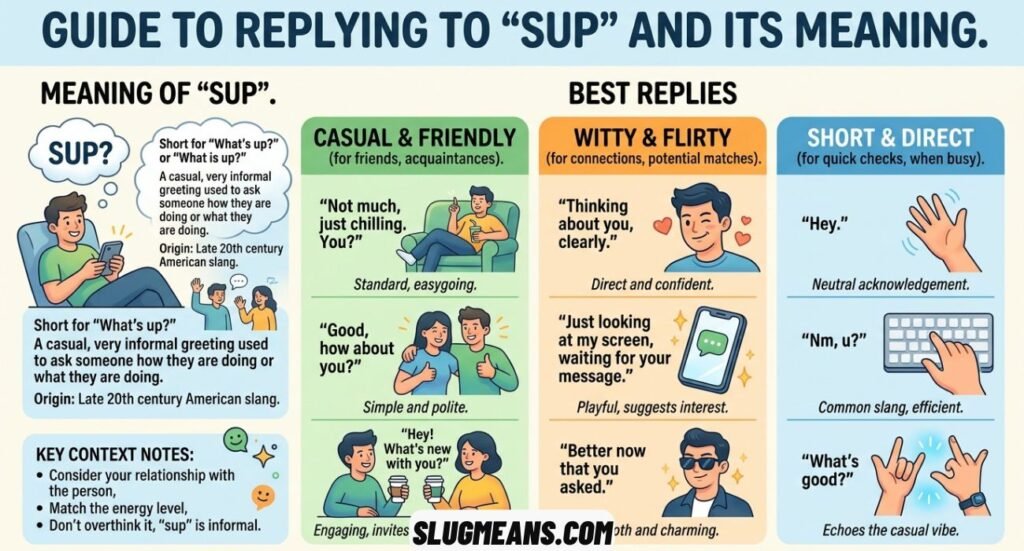
The sup meaning in chat is straightforward. “Sup” is an informal slang greeting that comes from the phrase “What’s up?” Instead of typing the full question, people shorten it to “sup” because it’s quicker and more casual.
Although it looks like a question, “sup” usually isn’t asking for a detailed explanation of your day. Most of the time, it’s simply a friendly way to say hello or start talking.
What Does “Sup” Mean in Texting?
In text messaging, “sup” can mean several things depending on the conversation and your relationship with the sender.
It may mean:
- Hello
- What’s happening?
- How are you doing?
- What are you doing right now?
- Want to chat?
- Are you free?
For example:
Friend: Sup?
You: Just got home. What’s up with you?
In this example, neither person expects a long answer. They’re simply beginning a conversation.
Is “Sup” Different from “What’s Up?”
The meanings are almost identical, but the tone is slightly different.
| Greeting | Tone | Common Use |
| Sup | Very casual | Friends, texting, social media |
| What’s up? | Casual | Friends, coworkers, everyday conversation |
| Hey | Neutral | Anyone |
| Hello | Formal | Professional or first-time conversations |
Because “sup” is very informal, it’s best used with people you already know rather than in business emails or formal conversations.
Is “Sup” Friendly or Rude?
Many people wonder whether “sup” sounds rude because it’s so short.
In most cases, the answer is no.
The tone depends on:
- Your relationship with the sender
- Previous conversations
- Emojis
- Timing
- Overall context
For example:
Sup 😊 feels warm and friendly.
Sup 😏 may sound playful or flirty.
SUP written in all capital letters can seem louder or more demanding, although many people simply type that way.
Understanding tone in texting is just as important as understanding the actual words.
How to Respond to “Sup” (Without Sounding Boring)
There isn’t one perfect reply to “sup.” The best response depends on who sent the message and why they may be reaching out.
A thoughtful reply keeps the conversation moving instead of ending it with a simple “nothing.”
Let’s look at different situations.
1. From a Close Friend
Friends usually text “sup” because they want to chat, make plans, or simply check in.
You don’t need to overthink your response. Keep it natural and match their energy.
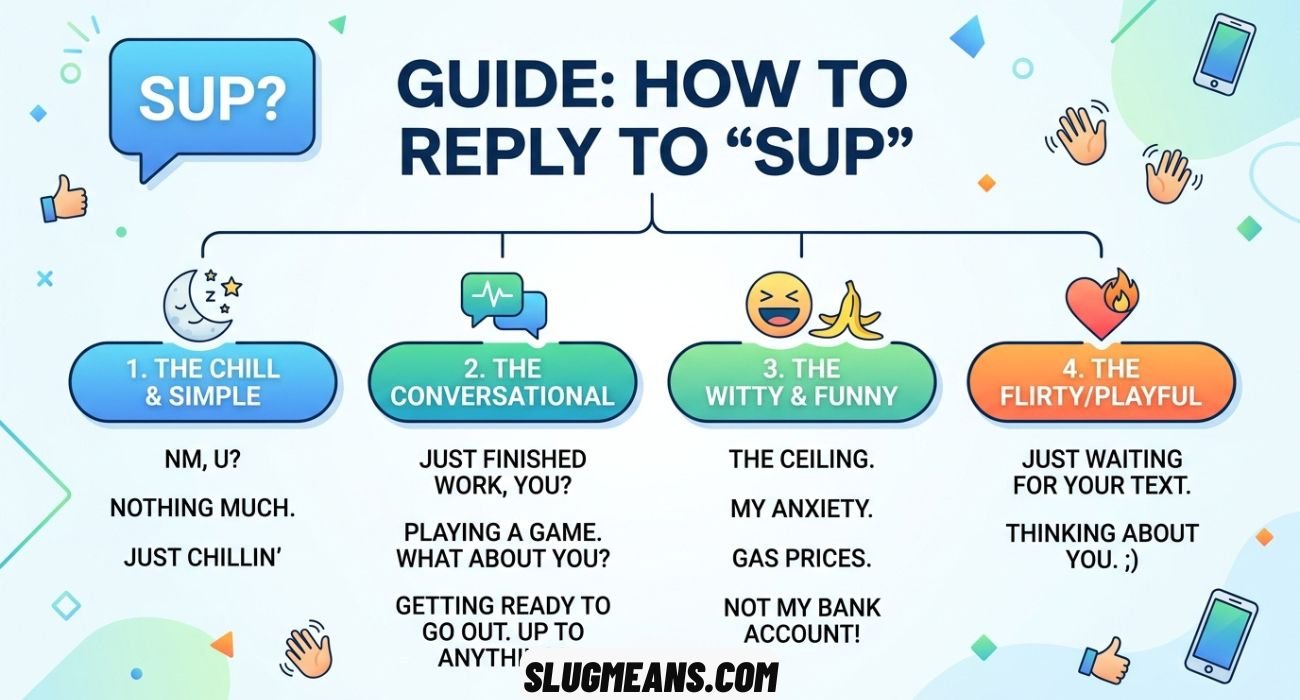
Some good replies include:
- Not much. You?
- Just watching Netflix.
- Working right now.
- Trying to survive Monday.
- Just got back from the gym.
- What’s new with you?
Adding a question at the end encourages the conversation to continue.
Example:
Friend: Sup?
You: Just finished dinner. What are you up to tonight?
This response gives information while inviting them to reply.
Funny Replies for Friends
If your friend enjoys humor, try something unexpected.
Examples:
- Fighting for my life against my laundry.
- Plotting world domination.
- Waiting for payday.
- Existing… barely.
- Living the dream… kind of.
Funny replies make conversations more memorable and often lead to longer chats.
2. From a Crush or Someone You’re Dating
When your crush texts “sup,” they’re often looking for an easy way to start talking.
A playful response can help build chemistry without trying too hard.
Examples:
- Better now that you’re texting.
- Thinking about someone…
- Waiting for your message.
- Missing you a little.
- Just wondering when you’d text me.
These replies feel warm without sounding overly dramatic.
Flirty Replies
Here are some playful responses that work well:
- Nothing much. Want to change that?
- Just smiling because you texted.
- Trying to decide if I should flirt with you today.
- Bored until you showed up.
Keep your reply light and genuine. Overusing pickup lines can feel forced.
3. From a Co-worker or Acquaintance
Professional conversations should stay friendly but respectful.
Avoid slang that could be misunderstood.
Good responses include:
- Just finishing some work. How about you?
- Pretty busy today.
- Doing well, thanks. What’s going on?
- Just taking a short break.
These replies sound approachable while maintaining professionalism.
4. From Someone You’d Rather Not Chat With
Sometimes you receive a “sup” message from someone you don’t want to have a long conversation with.
It’s perfectly okay to respond politely without encouraging more discussion.
Examples:
- Not much.
- Busy right now.
- Maybe later.
- Hope you’re doing well.
Short, respectful answers help set healthy boundaries without being rude.
See Also : Skull Emoji Meaning
Unexpected & Creative Replies That Stand Out
If everyone replies with “Nothing much,” your response won’t be very memorable.
A little creativity can make conversations much more enjoyable.
Here are some unique replies:
| Creative Reply | Best For |
| The ceiling. | Dad jokes |
| My coffee level is dangerously low. | Humor |
| Looking for snacks. | Casual friends |
| Trying to remember why I walked into this room. | Funny conversations |
| Living my best life. | Positive chats |
| Downloading motivation… 12% complete. | Meme lovers |
| Currently accepting pizza donations. | Playful texting |
| Same old chaos. | Everyday conversations |
Creative replies work best with people who understand your sense of humor.
Why Do People Even Text “Sup”?
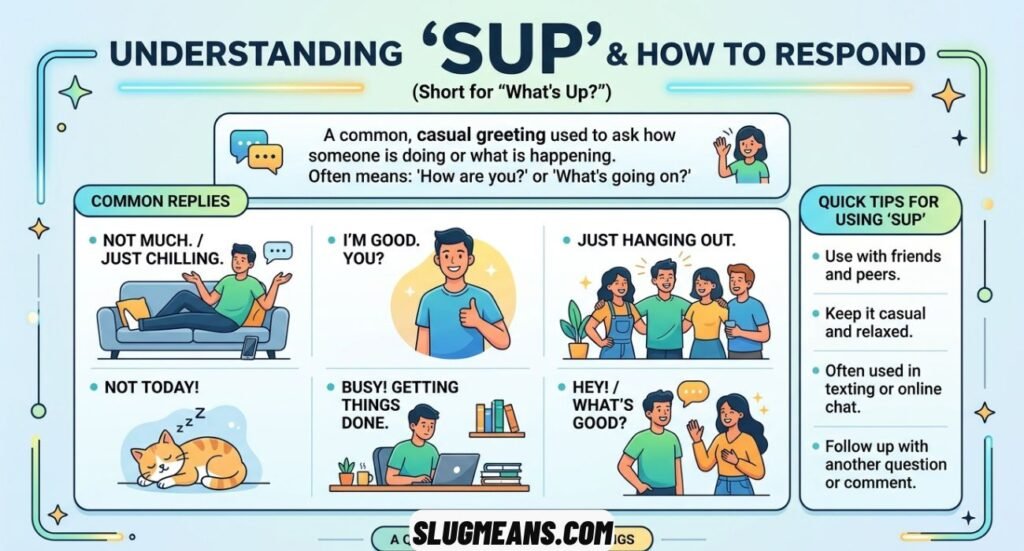
Now that you understand the sup meaning in chat, it’s helpful to know why people use it so often.
Despite being only three letters long, “sup” serves many different purposes.
1. It’s an Easy Conversation Starter
Many people don’t know how to begin a conversation.
Instead of writing a long message, they simply type “sup.”
It’s low-pressure and gives the other person freedom to respond naturally.
2. They’re Checking if You’re Available
Sometimes “sup” isn’t really the main message.
It’s simply a way to see whether you’re online before asking a bigger question.
For example:
Sup?
After you reply…
“Hey, are you free this weekend?”
In this case, “sup” acts as an icebreaker.
3. They Want to Flirt
Many people begin flirting with a casual greeting.
Instead of immediately saying something romantic, they start with “sup” to test the conversation.
If you respond positively, they’ll usually continue chatting.
4. They’re Bored
Research on digital communication shows that many casual messages are sent simply because people want social interaction during free time. A short greeting like “sup” is an easy way to reconnect without needing a specific reason.
5. They’re Thinking About You
Sometimes the simplest explanation is the correct one.
A person may text “sup” because you crossed their mind.
Even if they don’t have anything important to say, they’re making an effort to start a conversation.
That small message can be the beginning of a meaningful discussion, a new friendship, or even a relationship.
Turning “Sup” Into an Actual Conversation
A simple “sup” doesn’t have to lead to a short, boring exchange. With the right response, you can turn a one-word greeting into an interesting conversation. The key is to share a little about yourself and invite the other person to do the same.
Whether you’re chatting with a friend, a crush, or a coworker, adding a little personality makes the conversation feel more natural.
Share Something Real
One of the easiest ways to keep the conversation going is to share a small update about your day.
Instead of replying with only “Nothing much,” give the other person something they can respond to.
For example:
Them: Sup?
You: Just got back from the gym. Feeling exhausted but good. What about you?
Or:
You: Just finished watching a great movie. Have you seen anything good lately?
These replies make it easier for the other person to continue the conversation instead of ending it.
Good examples
- Just made homemade tacos. They turned out surprisingly good.
- Working on a new project today.
- Finally finished that book I told you about.
- Enjoying a lazy Sunday afternoon.
- Just got back from a walk.
Small details make conversations feel genuine without oversharing.
Ask Something Specific
One of the biggest mistakes people make is replying with a single word.
Instead, ask a question that gives the other person something meaningful to answer.
Good examples include:
- How’s your day going?
- What are you doing today?
- Any plans for the weekend?
- Did you finish your exam?
- How’s work been lately?
- Have you watched that new series yet?
- Still playing that game?
Specific questions create longer conversations because they’re easier to answer than a general “How are you?”
For example:
Them: Sup?
You: Just relaxing after work. Have you been busy today?
This reply keeps the conversation moving naturally.
Use Media or Humour
Not every conversation has to be serious.
Sometimes the best reply is a funny GIF, meme, voice note, or emoji.
Popular responses include:
- A funny cat GIF
- A laughing emoji 😂
- A selfie with a funny caption
- A short voice message
- A meme that matches your mood
For example:
Them: Sup?
You: Sends a sleepy selfie “This is what Monday looks like.”
Humor often makes conversations feel more relaxed and memorable.
See Also : Flushed Face Emoji Meaning
Understanding the Real Meaning Behind “Sup”
Although the sup meaning in chat seems simple, the real meaning often depends on the situation. The same word can have completely different intentions depending on who sends it and when.
Understanding the context helps you reply in the most appropriate way.
They’re Just Saying Hello
Most of the time, “sup” is simply another way of saying hello.
The sender isn’t expecting a deep conversation. They’re just opening the door to chat.
Example:
Friend: Sup?
You: Hey! Not much. What’s new?
They Want Your Attention
Sometimes people send “sup” because they’re hoping you’ll respond quickly.
They may have something important to ask but don’t want to jump straight into it.
Example:
Them: Sup?
You: Hey!
Them: Are you free later today?
In this situation, “sup” is only the conversation starter.
They Might Be Flirting
If someone you like suddenly messages you with “sup,” there’s a chance they’re looking for an excuse to talk.
Look for other signs, such as:
- They message you often.
- They reply quickly.
- They use emojis.
- They keep asking questions.
- They continue the conversation even after your reply.
Of course, one “sup” alone doesn’t always mean someone is interested romantically. It’s the overall pattern that matters.
They’re Feeling Bored
Many people send casual messages while waiting in line, riding the bus, or relaxing at home.
Instead of scrolling through social media, they decide to check in with someone.
A simple “sup” can turn a boring afternoon into an enjoyable conversation.
They’re Checking If You’re Available
Sometimes people don’t know if you’re busy.
Rather than asking directly, they send a quick “sup.”
If you respond, they know it’s a good time to continue talking.
Common Situations Where People Use “Sup”
You’ll see “sup” almost everywhere people chat online. It’s one of the most common texting slang greetings across social media and messaging apps.
Here are the situations where people use it most often.
Between Friends
Friends often use “sup” instead of saying hello because it’s quick and familiar.
Example:
Alex: Sup?
Jordan: Just got home. You?
On Snapchat
Because Snapchat is designed for casual conversations, “sup” appears frequently.
Someone might send:
- Sup
- Sup 😂
- Sup streak?
- Sup tonight?
These messages usually lead to longer chats or photo exchanges.
On Instagram
People often begin conversations in Instagram DMs with a simple “sup.”
It feels more relaxed than saying “Hello.”
In WhatsApp Chats
On WhatsApp, friends and family often use “sup” when checking in.
Example:
“Sup? Haven’t talked in a while.”
During Online Gaming
Gamers regularly use “sup” before joining a match.
Example:
“Sup? Ready for another game?”
It’s a fast way to greet teammates without interrupting gameplay.
On Dating Apps
On dating apps like Tinder, Bumble, or Hinge, many conversations start with “sup.”
While it’s common, it’s not always the most interesting opener.
Instead of replying with “Nothing,” try adding personality.
Example:
“Just planning my weekend. How about you?”
This creates a much better first impression.
In School or College Chats
Students often use “sup” before asking about homework, assignments, or upcoming exams.
Example:
“Sup? Did you finish the math assignment?”
At Work
Although less common, coworkers sometimes use “sup” in casual team chats or messaging apps like Slack or Microsoft Teams.
Keep your response friendly but professional.
Example:
“Just finishing today’s reports. What’s up?”
How to Reply to “Sup” from Friends or Peers
Friends usually aren’t looking for perfect grammar or clever lines. They just want a natural conversation.
Here are different types of replies depending on your mood.
Casual Replies
These work in almost every situation.
- Not much. You?
- Just relaxing.
- Same old, same old.
- Pretty good today.
- Just got home.
- What’s going on?
Funny Replies
If you enjoy making people laugh, try these.
- Fighting with my alarm clock.
- Looking for snacks like it’s a full-time job.
- Pretending to be productive.
- Surviving adulthood one coffee at a time.
- Waiting for the weekend to save me.
Positive Replies
Show a little enthusiasm.
- Having a great day so far.
- Just finished a workout.
- Feeling pretty good today.
- Can’t complain.
- Everything’s going well.
Curious Replies
Keep the conversation moving.
- What’s new with you?
- Anything exciting happening?
- What’s today’s adventure?
- Tell me something interesting.
- Got any good news?
Replies for Group Chats
In group conversations, keep your reply light.
Examples:
- Hey everyone!
- What’s everyone up to?
- Who’s making plans today?
- What’s the latest news?
- Hope everyone’s doing well.
Matching the group’s energy helps conversations feel natural.
Flirty and Fun Replies for “Sup” from a Crush
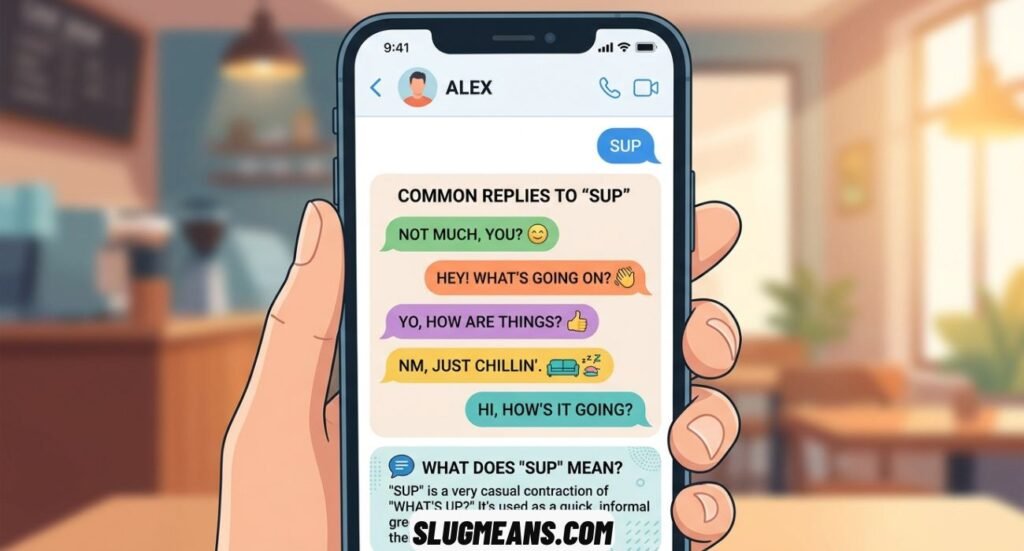
When your crush sends “sup,” it’s a chance to show confidence without trying too hard.
The best flirty replies feel playful and genuine.
Some great examples include:
- Better now that you’re here.
- Waiting for you to text me.
- I was just thinking about you.
- Guess who finally decided to message me.
- Trying not to smile… too late.
If you’re comfortable being more playful, you can say:
- Want to make my day more interesting?
- I was getting bored until your message popped up.
- You always know when to text.
Keep your tone light. If the other person responds positively, continue the conversation naturally instead of forcing the flirting.
Do’s
- Be yourself.
- Use humor.
- Ask follow-up questions.
- Match their texting style.
Don’ts
- Try too hard.
- Send overly romantic messages too early.
- Overuse emojis.
- Make the conversation one-sided.
A little confidence goes much further than using copied pickup lines.
Why Tone and Context Matter in Texting
The sup meaning in chat may seem simple, but the tone behind the message can completely change its meaning. A single word like “sup” can sound friendly, curious, playful, or even distant depending on who sends it and how it’s written.
Before you reply, think about the relationship you have with the sender and the situation. This helps you avoid misunderstandings and keeps the conversation natural.
The Relationship Matters
The same message can have different meanings based on who sent it.
| Sender | What “Sup” Usually Means | Best Response |
| Best friend | Just saying hello | Casual or funny |
| Crush | Starting a conversation or flirting | Playful and engaging |
| Family member | Checking in | Friendly and warm |
| Coworker | Casual greeting | Professional but relaxed |
| New acquaintance | Breaking the ice | Polite and welcoming |
Always match your reply to the relationship rather than using the same response for everyone.
Emojis Can Change the Meaning
Adding an emoji gives “sup” a completely different feeling.
For example:
Sup 😊
This feels warm and friendly.
Sup 😏
This usually sounds playful or flirty.
Sup 👀
The sender might be curious or teasing you.
Sup 😂
This often means they’re already in a fun mood.
When replying, matching the other person’s tone usually creates a smoother conversation.
Capital Letters and Punctuation
Small changes in writing style can also affect how a message feels.
| Message | Possible Tone |
| Sup | Neutral |
| sup | Relaxed |
| SUP! | Excited or energetic |
| Sup…? | Curious or uncertain |
| Sup!!! | Very enthusiastic |
Of course, not everyone thinks about capitalization while texting, so don’t read too much into it unless it matches the rest of the conversation.
Timing Also Matters
When someone texts “sup” late at night, it may have a different purpose than a message sent during the afternoon.
Examples:
- Morning: Starting the day with a conversation.
- Afternoon: Checking in during lunch or a break.
- Evening: Looking to chat after work or school.
- Late night: Often casual, personal, or sometimes flirty.
The time of day provides useful clues about the sender’s intention.
Turning “Sup” into a Real Conversation
Many chats end quickly because both people keep sending short replies.
Instead of answering with just “Nothing much,” you can turn a simple greeting into an enjoyable conversation.
Keep the Conversation Balanced
Good conversations involve both people sharing and asking questions.
For example:
Them: Sup?
You: Just finished a workout. Feeling great! How’s your day been?
Instead of stopping after one sentence, you’ve given them something to respond to.
Ask Open-Ended Questions
Questions that can’t be answered with “yes” or “no” encourage longer conversations.
Good examples include:
- What’s been keeping you busy lately?
- What’s the best part of your week so far?
- Have you discovered any good movies recently?
- Any exciting plans coming up?
- What’s something fun you’ve done this week?
These questions make the conversation feel more interesting.
Match Their Energy
If someone sends a short message, don’t overwhelm them with a long paragraph.
Likewise, if they’re sending thoughtful responses, don’t reply with only one word.
Matching the other person’s energy creates a comfortable conversation.
Use Humor Naturally
A little humor makes conversations memorable.
Example:
Them: Sup?
You: Just trying to convince myself that folding laundry counts as exercise.
Lighthearted jokes often make people smile and encourage them to reply.
Example Conversation
Here’s how a simple “sup” can turn into a meaningful chat.
Alex: Sup?
Taylor: Just got back from hiking. It was amazing! What about you?
Alex: Nice! I’ve been thinking about trying hiking.
Taylor: You definitely should. There’s a great trail about twenty minutes from town.
Alex: Sounds fun. Maybe next weekend?
Notice how the conversation naturally grows because both people share information and ask questions.
How “Sup” Has Changed with Modern Texting
The word “sup” has been around for years, but the way people use it has changed with the rise of social media and instant messaging. Today, it’s one of the quickest ways to start a conversation without sounding too formal. Whether you’re using Snapchat, Instagram, or WhatsApp, “sup” feels natural and friendly.
Younger generations especially prefer short greetings because they save time and match the fast pace of online communication. Even though new texting slang appears every year, “sup” remains one of the most common and widely understood greetings across different platforms.
Common Mistakes to Avoid When Replying to “Sup”
One common mistake is replying with only “K” or leaving the message on read. These responses can make you seem uninterested, even if that wasn’t your intention. A simple reply followed by a question usually keeps the conversation positive and engaging.
Another mistake is overthinking the message. In most cases, “sup” is just a casual greeting and doesn’t require a perfect answer. Keep your response natural, match the other person’s tone, and avoid sending long paragraphs unless the conversation naturally develops.
Best One-Word Replies to “Sup”
Sometimes a short reply is all you need, especially when you’re busy or keeping the conversation casual. One-word responses can still sound friendly if they’re used in the right context and followed up later if needed.
Some popular one-word replies include “Chilling,” “Working,” “Relaxing,” “Nothing,” “Busy,” “Cooking,” and “Gaming.” These answers quickly tell the other person what you’re doing while leaving room for the conversation to continue if they want to ask more.
See Also : DSL Meaning Slang: What It Really Means
Is “Sup” Appropriate in Professional Conversations?
Although “sup” is common among friends, it isn’t always the best choice in professional settings. In business emails or conversations with clients, greetings like “Hello,” “Hi,” or “Good morning” sound more respectful and professional.
However, some relaxed workplaces use casual messaging apps like Slack or Microsoft Teams, where coworkers who know each other well may occasionally use “sup.” Always consider your workplace culture before using informal chat abbreviations in professional communication.
Similar Slang Words You Should Know
If you understand the sup meaning in chat, learning other popular internet slang becomes much easier. Many online conversations include short expressions that help people communicate quickly without typing full sentences.
Some commonly used terms include “WSP” (What’s up), “WYD” (What are you doing?), “WTW” (What’s the word?), “YO” (Hello), and “BRB” (Be right back). Knowing these expressions will make it easier to understand conversations on social media and reply confidently in everyday texting.
FAQ,s
SUP is a casual short form of “What’s up?” It is commonly used in chats and text messages as a friendly greeting or to start a conversation.
How to reply to SUP in a chat?
You can reply with simple responses like “Not much, you?”, “Just relaxing. What’s up?”, or “Doing well! How about you?” to keep the conversation going.
Can I say SUP to a girl?
Yes, you can say “sup” to a girl if you already know her and the conversation is casual. It sounds friendly and informal but isn’t suitable for formal or professional situations.
What is SUP used for?
SUP is used to greet someone, check how they’re doing, start a conversation, or see if they’re available to chat. It is popular on apps like WhatsApp, Snapchat, Instagram, and Messenger.
Final Thoughts
Understanding the sup meaning in chat is about more than knowing it’s short for “What’s up?” It’s about recognizing the intention behind the message and choosing a response that fits the situation.
Whether you’re chatting with a close friend, a family member, a coworker, or someone you have a crush on, the best reply is one that feels genuine. Sometimes a simple “Not much, you?” is perfect. Other times, adding humor, asking a thoughtful question, or sharing a quick update can turn a one-word greeting into a memorable conversation.
As texting slang continues to evolve, words like “sup,” “wyd,” “brb,” “imo,” and “idk” remain popular because they’re quick, friendly, and easy to understand. Learning how people use these expressions helps you communicate more naturally and confidently across today’s messaging apps.