Skull Emoji Meaning: What 💀 Really Means in Texts
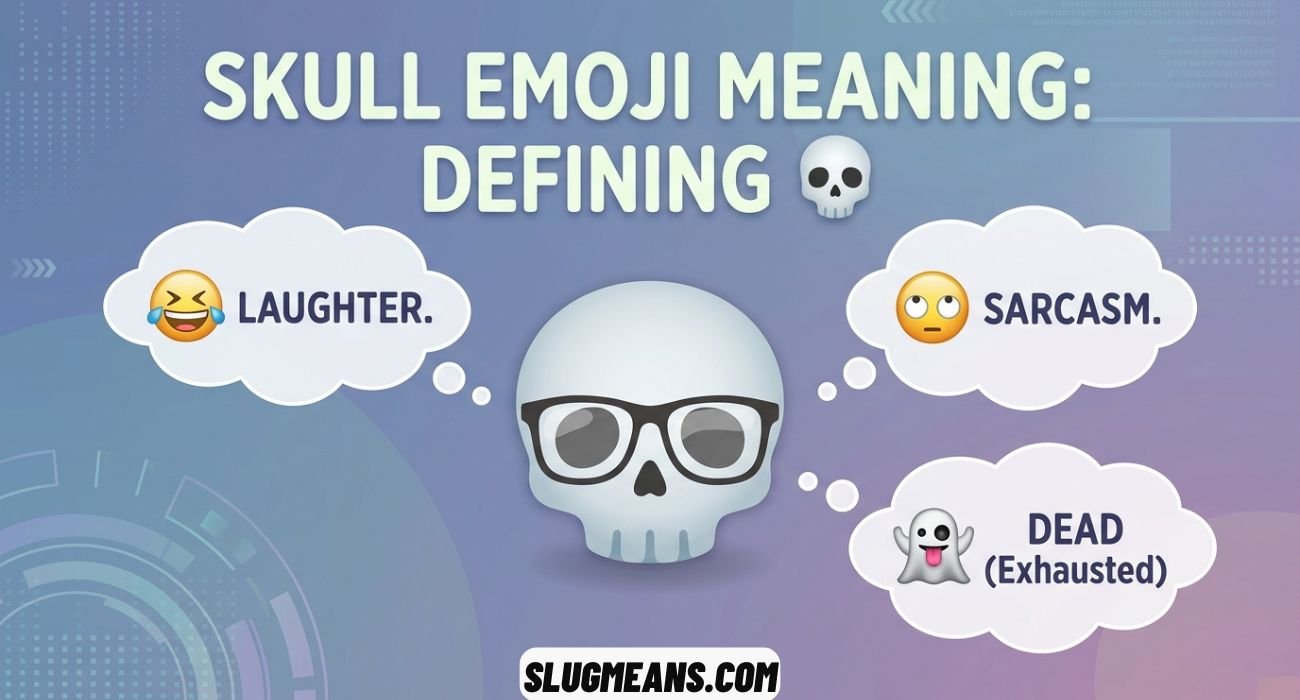
The Skull Emoji Meaning is not always about death. Today, it usually means someone is laughing very hard. The meaning changes based on the conversation.
Many people see 💀 on TikTok, Instagram, and text messages every day. But do you know what it really means? The answer may surprise you because it has several modern uses.
The Skull Emoji Meaning has evolved with internet slang and social media trends. It can show laughter, shock, or embarrassment. Understanding the context helps you use the emoji correctly.
Skull Emoji Meaning
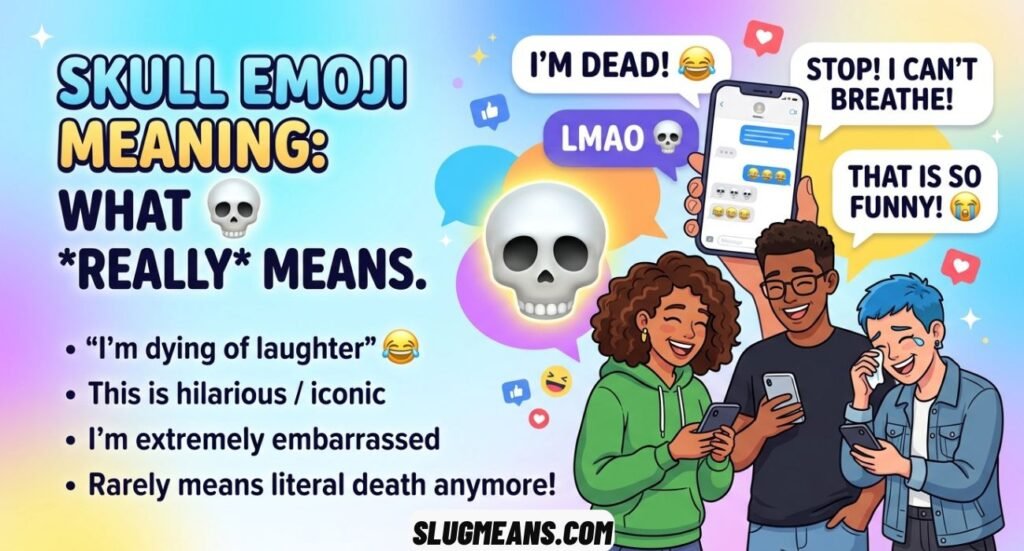
The 💀 Skull Emoji is one of the most misunderstood emojis because its meaning depends entirely on the situation. Originally designed to represent a human skull, it symbolized death, mortality, danger, or Halloween themes. However, modern internet culture has transformed it into a completely different expression.
Today, the most common Skull Emoji Meaning is:
“I’m dead from laughing.”
Of course, no one means they have literally died. Instead, the emoji exaggerates how funny, awkward, or unbelievable something is. It’s a playful way of saying:
- “That joke killed me.”
- “I’m laughing so hard.”
- “I can’t believe what I just saw.”
- “That’s hilarious.”
- “I’m speechless.”
This shift happened largely because of social media, where Gen Z, meme creators, and online communities developed new ways to express emotions with emojis.
Quick Featured Snippet Answer
What does the 💀 Skull Emoji mean?
The Skull Emoji Meaning usually represents extreme laughter, disbelief, embarrassment, or shock in modern texting and social media. Although it originally symbolized death or danger, today’s internet users commonly use it instead of 😂 to mean “I’m dead laughing.”
Common Meanings of 💀
| Meaning | Example |
| Extreme laughter | “That meme 💀” |
| Shock | “You actually did that? 💀” |
| Embarrassment | “I waved back at someone who wasn’t waving at me 💀” |
| Dark humor | “That joke was wild 💀” |
| Literal death | Halloween decorations 💀 |
Initial Signification Of The Skull Emoji
Before becoming an internet favorite, the Skull Emoji had a much more serious meaning. When Unicode introduced the emoji, it was intended to represent an actual human skull.
Historically, skulls have symbolized many ideas across different cultures. They often represent death, mortality, danger, poison, and the reminder that life is temporary. Because of these meanings, the emoji appeared frequently in conversations about serious topics rather than funny ones.
For example:
- Halloween decorations 💀🎃
- Pirate stories ☠️
- Dangerous chemicals
- Horror movies
- Historical discussions about skeletons
The original design was never meant to express laughter. That interpretation developed much later through internet culture.
The Historical Meaning of Skull Symbols
Long before emojis existed, skulls appeared in paintings, literature, architecture, and warning signs.
A skull could represent:
- Mortality
- Life and death
- Danger
- Poison
- Fear
- Mystery
Even today, you’ll find skull symbols on toxic chemicals, warning labels, and Halloween decorations.
Because of these long-standing meanings, older generations may still interpret 💀 literally, while younger users often see it as a humorous reaction.
Why the Original Meaning Changed
Language changes over time, and emojis evolve just like words.
The phrase “I’m dead” became popular online as a dramatic way to say something was incredibly funny.
For example:
“That video is so funny. I’m dead.”
Eventually, users stopped typing the words and simply replied with 💀.
This simple change made the skull emoji one of the internet’s strongest symbols of digital humor.
How The Skull Emoji Meaning Changed On Social Media
Social media completely transformed the Skull Emoji Meaning.
In the early days of smartphones, people mainly used emojis to show straightforward emotions. A smile meant happiness, a crying face meant sadness, and a skull meant death.
Then meme culture changed everything.
As platforms like Twitter (now X), TikTok, Instagram, and Snapchat exploded in popularity, users began creating exaggerated reactions. Instead of saying:
“That made me laugh.”
People started saying:
“I’m dead.”
The skull emoji became the perfect visual shortcut.
Today, millions of users post 💀 every day without thinking about death at all.
The Influence of Gen Z
Perhaps no generation has influenced emoji language more than Gen Z.
Younger internet users enjoy hyperbole, where ordinary situations are exaggerated for humor.
For example:
Someone slips on a banana peel.
Instead of replying:
“LOL.”
Many people simply comment:
💀
That single emoji communicates:
- “I’m crying from laughter.”
- “That was ridiculously funny.”
- “I wasn’t expecting that.”
Because it’s short, expressive, and easy to recognize, it quickly became one of the internet’s favorite reaction emojis.
Memes Helped It Go Viral
Modern memes rely on fast reactions.
Since most users scroll quickly, emojis communicate emotions instantly.
The skull emoji became popular because it expresses stronger laughter than traditional emojis like 😂.
Many users even believe:
😂 = Mildly funny
💀 = Absolutely hilarious
Although this isn’t an official rule, it’s become a widely accepted part of online slang.
Why Younger Users Prefer 💀 Over 😂
Many younger users consider 😂 to feel old-fashioned because it was heavily used during the early smartphone years.
Instead, they prefer emojis like:
- 💀
- 😭
- 🫠
- 🫡
Among these, 💀 has become the universal symbol for “I laughed harder than words can describe.”
This trend shows how digital communication continues to evolve as new generations create their own language.
Skull Emoji Meaning Facts Table
| Feature | Details |
| Emoji | 💀 |
| Unicode Name | Skull |
| Original Meaning | Death, mortality, danger, skeleton |
| Modern Meaning | Extreme laughter, shock, embarrassment, disbelief |
| Popular On | TikTok, Instagram, Snapchat, X (Twitter), messaging apps |
| Common Slang | “I’m dead,” “I’m crying,” “That killed me,” “That’s hilarious” |
| Emotional Tone | Funny, sarcastic, dramatic, ironic |
| Used By | Mostly Gen Z, Millennials, and active social media users |
| Best Used For | Funny videos, memes, jokes, embarrassing moments, shocking stories |
| Avoid Using In | Condolence messages, funerals, medical emergencies, professional communication |
| Related Emojis | 😂 🤣 😭 ☠️ 👻 |
| Internet Popularity | One of the most frequently used reaction emojis on social media |
Skull Emoji Meaning In Text Messages
The Skull Emoji Meaning in text messages is usually very different from its original meaning. In everyday conversations, 💀 rarely refers to actual death. Instead, it is commonly used to show extreme laughter, shock, second-hand embarrassment, or complete disbelief.
When someone sends you a 💀 after a funny joke, they are usually saying:
“That was so funny I can’t stop laughing.”
This modern meaning comes from the popular internet phrase “I’m dead,” which exaggerates how funny something is. Instead of typing those words, people simply send the skull emoji.
Common Meanings of 💀 in Texts
Here are the most common ways people use the skull emoji in text messages:
| Text Message | Skull Emoji Meaning |
| “That video 💀” | It was incredibly funny. |
| “You really said that? 💀” | I’m shocked or can’t believe it. |
| “I tripped in front of everyone 💀” | That was very embarrassing. |
| “This teacher gave us homework on Friday 💀” | I’m frustrated or jokingly disappointed. |
| “Bro, stop 💀” | You’re making me laugh too much. |
As you can see, the emoji often adds emotion that words alone cannot express.
Example Conversations
Example 1
Alex: I accidentally called my teacher “Mom.”
Emma: 💀💀💀
Meaning: Emma thinks the situation is extremely funny.
Example 2
Jake: I forgot my wallet at home again.
Ryan: Bro 💀
Meaning: Ryan is reacting with disbelief and humor.
Example 3
Sarah: I just realized today’s assignment was due yesterday.
Emily: 💀
Meaning: Emily understands the embarrassing situation and reacts dramatically.
What If Someone Sends Only 💀?
Sometimes a person replies with nothing but the skull emoji.
That usually means one of the following:
- They are laughing too hard to type.
- They are shocked by what you said.
- They think something is unbelievably funny.
- They are reacting to an awkward or embarrassing moment.
In most casual conversations, a standalone 💀 is a positive or humorous response rather than a negative one.
Does Context Matter?
Absolutely.
The same emoji can carry different meanings depending on the conversation.
For example:
- In a funny group chat, 💀 means laughter.
- During Halloween, it may simply represent a skeleton or spooky theme.
- In discussions about history or medicine, it can refer to an actual skull.
- In conversations about accidents or crime, it may keep its literal meaning.
This is why understanding the context is more important than looking at the emoji by itself.
See Also : Flushed Face Emoji Meaning
Skull Emoji Meaning By Context
One reason the Skull Emoji Meaning has become so popular is its flexibility. The same emoji can express several emotions depending on the conversation. Knowing the context helps you avoid misunderstandings and use the emoji naturally.
Casual Conversations
In everyday chats, 💀 almost always represents laughter or playful exaggeration.
Friends often use it after hearing a funny story, seeing a hilarious photo, or reacting to an awkward moment. It creates a relaxed and humorous tone without needing many words.
For example:
Friend 1: I walked into the wrong classroom.
Friend 2: 💀
The second friend isn’t talking about death. They’re simply saying the story was hilarious.
Other common examples include:
- “Your autocorrect is wild 💀”
- “That dance move was crazy 💀”
- “I’m crying 😂💀”
Using the skull emoji in casual conversations makes reactions feel more expressive and relatable.
Dark Humor
The skull emoji is also common in dark humor, where jokes involve uncomfortable, ironic, or exaggerated situations.
Many memes use 💀 to react to jokes that are intentionally absurd or unexpected.
For example:
“My alarm watched me oversleep again 💀”
The humor comes from exaggeration rather than anything serious.
However, dark humor is subjective. What one person finds funny, another may find offensive. Before using 💀 in these situations, think about your audience and whether they share the same sense of humor.
Pros of using 💀 in dark humor:
- Adds dramatic emphasis.
- Fits modern meme culture.
- Makes reactions short and expressive.
Cons:
- Can be misunderstood.
- May seem insensitive during serious discussions.
- Not everyone enjoys dark humor.
Serious Topics
Although modern internet slang has changed the emoji’s meaning, the skull emoji still keeps its original purpose in many situations.
For example, it may represent:
- Death
- Danger
- Poison
- Crime
- Halloween
- Horror movies
- Skeletons
Imagine someone posts:
“Remembering those who lost their lives.”
Adding 💀 here would likely appear disrespectful because the conversation is about a real tragedy rather than humor.
Likewise, using the skull emoji in workplace discussions, medical conversations, or condolence messages can easily be misunderstood.
A simple rule is:
If the topic is serious, assume the skull emoji will be interpreted literally. If the topic is humorous, it will usually be interpreted as laughter.
Skull Emoji Meaning On Different Platforms
Although the basic Skull Emoji Meaning stays similar across the internet, each social media platform has developed its own style of using 💀. Understanding these differences can help you communicate more naturally.
TikTok
On TikTok, the skull emoji has become one of the most common reaction emojis.
Users frequently comment 💀 under funny videos, unexpected endings, or embarrassing moments.
Examples include:
- “This video 💀”
- “The ending got me 💀”
- “I wasn’t ready for that 💀”
On TikTok, 💀 usually means:
- “I’m laughing so hard.”
- “That was hilarious.”
- “I’m completely shocked.”
Because TikTok is driven by short videos and fast reactions, a single emoji often says more than an entire sentence.
Twitter or X
On X (formerly Twitter), the skull emoji often accompanies sarcasm, memes, and viral posts.
Users commonly combine it with witty comments to exaggerate their reactions.
Examples:
“He really thought that would work 💀”
“This reply section is wild 💀”
The emoji helps readers understand that the comment is playful rather than serious.
Since conversations on X move quickly, concise reactions like 💀 are especially popular.
On Instagram, the skull emoji appears frequently in comments, Stories, Reels, and direct messages.
People often use it to react to:
- Funny Reels
- Meme pages
- Friends’ embarrassing moments
- Celebrity posts
- Viral challenges
Example:
Friend posts an old school photo.
Comment:
“Not the haircut 💀”
Here, the emoji softens the joke and shows friendly teasing rather than criticism.
Snapchat
On Snapchat, conversations tend to be more personal, so the skull emoji is commonly used between close friends.
Typical examples include:
- Reacting to funny selfies.
- Responding to awkward situations.
- Laughing at voice notes.
- Continuing inside jokes.
Example:
Friend: I accidentally sent that message to my boss.
You: 💀💀💀
This instantly communicates laughter without needing additional text.
Because Snapchat focuses on quick, informal communication, the skull emoji has become one of the platform’s most recognizable reactions.
See Also : DSL Meaning Slang: What It Really Means
Skull Emoji Meaning In Message
Receiving a 💀 in a message can be confusing if you’re unfamiliar with modern internet slang. The Skull Emoji Meaning depends on the message before it, the relationship between the people chatting, and the overall tone of the conversation.
Most of the time, the skull emoji is simply a humorous reaction. It tells the sender, “That was so funny,” “I’m shocked,” or “I can’t believe what just happened.”
When Someone Sends Only 💀
A message containing only the skull emoji is becoming increasingly common, especially among Gen Z and younger Millennial users.
Here are the most likely meanings:
| Message | Meaning |
| 💀 | I’m laughing so hard. |
| 💀💀 | That’s even funnier. |
| 💀😭 | I’m laughing until I’m crying. |
| 💀😂 | That joke completely got me. |
| ☠️💀 | Dramatic or dark humor reaction. |
The emoji works almost like a universal reaction image. Instead of typing a sentence, people let the emoji express their emotions.
Examples of the Skull Emoji in Messages
Example 1
Chris: I accidentally liked a photo from 2018.
Taylor: 💀
Meaning: Taylor thinks the situation is hilariously embarrassing.
Example 2
Emma: I wore two different shoes to work today.
Sophia: Stop 💀
Meaning: Sophia is laughing and can hardly believe the story.
Example 3
David: My dog stole my sandwich again.
Ryan: 💀😂
Meaning: Ryan finds the story extremely funny.
Expert Tip
If you’re unsure what someone means by 💀, read the surrounding messages. In more than 90% of casual chats, it represents laughter or disbelief rather than anything negative.
Why People Use The Skull Emoji Instead Of Laughing Emojis
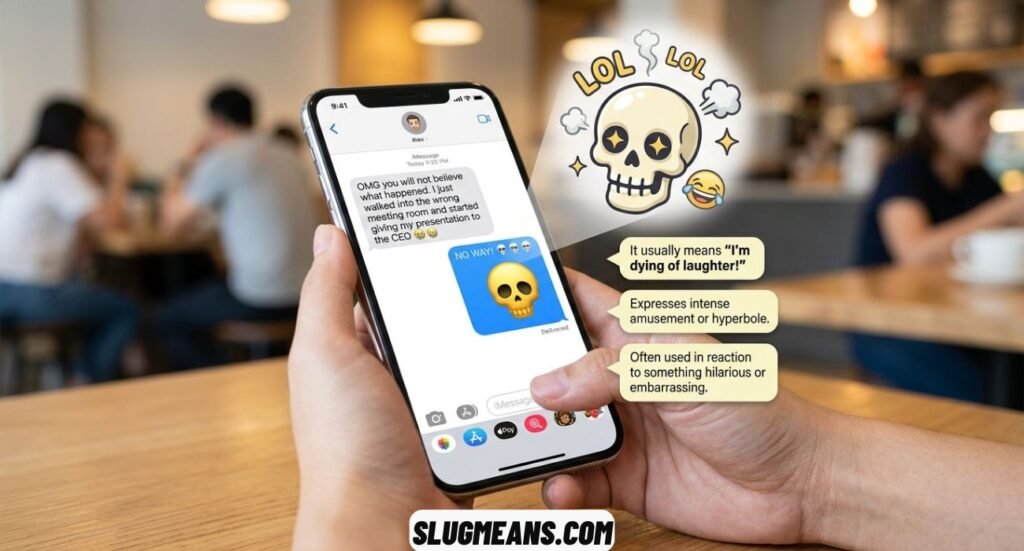
The biggest reason people choose 💀 over 😂 is that internet language keeps evolving. Every generation creates new ways to express emotions online, and today’s users often feel the skull emoji communicates stronger laughter than traditional laughing emojis.
It Shows More Intense Laughter
The phrase “I’m dead laughing” inspired the modern use of the skull emoji.
Instead of saying:
“That’s funny.”
People exaggerate by saying:
“That joke literally killed me.”
The skull emoji visually represents this exaggeration.
It Feels More Modern
Many younger users consider 😂 a symbol of older texting habits. While there’s nothing wrong with using the Face with Tears of Joy emoji, internet trends have shifted toward emojis like:
- 💀
- 😭
- 🫠
- 🫡
These emojis often feel fresher in today’s online culture.
It Matches Meme Culture
Modern memes rely heavily on exaggerated reactions.
Imagine seeing a video where someone accidentally walks into a glass door.
A simple 😂 might express amusement.
A 💀 tells everyone:
“That was unbelievably funny.”
Because memes spread rapidly across TikTok, Instagram, and X, this style of expression has become part of everyday digital communication.
Comparing Popular Laughing Emojis
| Emoji | Best Used For | Intensity |
| 😂 | Normal laughter | Medium |
| 🤣 | Very funny situations | High |
| 💀 | “I’m dead laughing” | Very High |
| 😭 | Laughing so hard you’re “crying” | Very High |
There is no right or wrong choice. Each emoji simply creates a slightly different emotional tone.
When Not To Use The Skull Emoji
Although the modern Skull Emoji Meaning is usually humorous, there are situations where using it can seem disrespectful or confusing.
Understanding when not to use 💀 is just as important as knowing when it’s appropriate.
During Condolence Messages
If someone shares news about the loss of a loved one, avoid using the skull emoji.
Instead, respond with empathy.
For example:
✅ “I’m so sorry for your loss.”
❌ “💀”
Even if you didn’t intend any harm, the emoji’s original association with death may hurt the recipient.
Professional Communication
Avoid using the skull emoji in:
- Business emails
- Job applications
- Client conversations
- Workplace announcements
Professional communication should remain clear and respectful.
Medical or Emergency Discussions
When discussing:
- Hospitals
- Injuries
- Accidents
- Health conditions
the skull emoji may be interpreted literally, making your message appear insensitive.
Talking With People Who Don’t Know Internet Slang
Older family members or colleagues may still understand 💀 as a symbol of death.
If you’re unsure whether someone knows the modern meaning, choose a more universally understood emoji such as 😊 or 😂.
Best Practice
Before sending 💀, ask yourself one question:
Could someone misunderstand this?
If the answer is yes, it’s better to choose different wording or another emoji.
Skull Emoji Meaning vs Other Emojis
Many emojis express laughter, surprise, or spooky themes, but each one has a slightly different purpose. Understanding these differences helps you choose the right emoji for every conversation.
| Emoji | Primary Meaning | Best Used When |
| 💀 | Extreme laughter, shock, embarrassment | Funny conversations, memes |
| 😂 | Joyful laughter | Everyday jokes |
| 🤣 | Rolling with laughter | Very funny stories |
| 😭 | Crying, but also laughing in slang | Emotional or hilarious moments |
| ☠️ | Skull and Crossbones, poison, danger | Warnings, pirates, Halloween |
| 👻 | Ghost, spooky fun | Halloween or playful chats |
💀 vs 😂 Face With Tears of Joy
The biggest difference is intensity.
😂 expresses normal laughter.
💀 exaggerates that laughter by saying:
“That was so funny I’m dead.”
💀 vs 🤣 Rolling on the Floor Laughing
Both emojis show intense laughter.
However, 🤣 is a traditional laughing emoji, while 💀 has become part of modern Gen Z slang and meme culture.
💀 vs ☠️ Skull and Crossbones
Although these emojis look similar, they have different meanings.
☠️ Skull and Crossbones usually represents:
- Poison
- Pirates
- Toxic substances
- Serious danger
The regular skull emoji (💀) is much more common in casual online conversations.
💀 vs 😭 Loudly Crying Face
The Loudly Crying Face emoji originally represented sadness.
Today, many people also use 😭 to mean:
“I’m crying from laughter.”
In internet slang, 💀 and 😭 are often used together for extra emphasis.
Example:
“This video 😭💀”
💀 vs 👻 Ghost Emoji
The ghost emoji focuses on playful, spooky, or Halloween themes.
The skull emoji is more commonly associated with humor, shock, and exaggerated reactions.
Why The Skull Emoji Meaning Keeps Growing
The Skull Emoji Meaning continues to evolve because language on the internet changes faster than ever before.
Every year, new trends appear on TikTok, Instagram, Snapchat, and X, introducing fresh ways to communicate with emojis.
Social Media Shapes Emoji Language
Unlike traditional dictionaries, internet slang develops through millions of everyday conversations.
When enough people begin using an emoji differently, its meaning naturally expands.
That’s exactly what happened with 💀.
Younger Generations Drive Trends
Gen Z and Gen Alpha have embraced emojis as part of their everyday language.
They often combine emojis with slang, memes, and viral trends, creating expressions that quickly spread across the internet.
Emojis Continue to Evolve
Just as words gain new meanings over time, emojis also evolve.
Years ago:
💀 = Death
Today:
💀 = “I’m laughing so hard.”
Future generations may give the emoji even more meanings as online communication continues to change.
The ability of emojis to adapt is one reason they remain such an important part of digital communication.
See Also : CBFW Meaning Slang: Complete Guide
How Different Age Groups Interpret the Skull Emoji
The Skull Emoji Meaning can vary depending on a person’s age. Younger users, especially Gen Z and Gen Alpha, usually see 💀 as a symbol of extreme laughter, shock, or internet humor. They often use it in place of traditional laughing emojis because it feels more modern and expressive.
Older generations, however, may still associate the skull emoji with its original meaning of death, danger, or Halloween. Because of this difference, the same emoji can sometimes cause confusion. Understanding your audience helps ensure your message is interpreted the way you intended.
Is the Skull Emoji Flirty or Romantic?
On its own, the skull emoji is not considered a romantic emoji. Most people use 💀 to react to something funny or embarrassing rather than to express love or attraction. If someone sends it after a joke, they’re likely saying they found it hilarious—not that they’re flirting.
However, context always matters. Some people use 💀 while playfully teasing a crush or reacting to an attractive photo with comments like, “You’re too good-looking 💀.” In these cases, the emoji adds humor to the conversation rather than expressing romance directly.
Common Mistakes People Make When Using the Skull Emoji
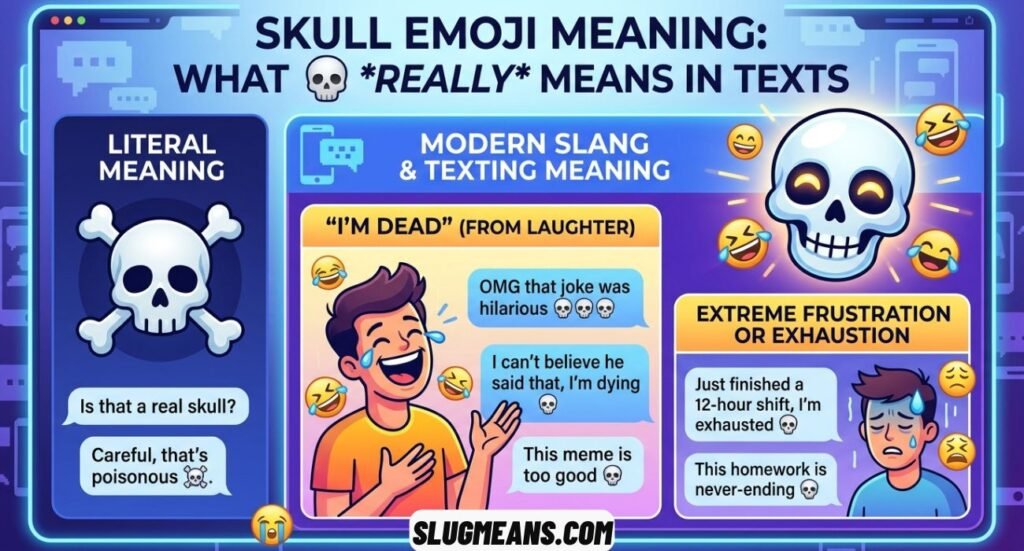
One common mistake is using the skull emoji in serious situations, such as condolence messages or discussions about illness. Since the emoji still has a literal connection to death, it may come across as insensitive or disrespectful, even if that wasn’t the sender’s intention.
Another mistake is assuming everyone understands modern internet slang. While younger users may instantly recognize 💀 as a sign of laughter, others may interpret it literally. When chatting with coworkers, older family members, or new acquaintances, consider whether another emoji or a written response would be clearer.
Popular Skull Emoji Combinations and Their Meanings
People often combine the skull emoji with other emojis to create stronger reactions. These combinations help express emotions more clearly and have become popular across TikTok, Instagram, and Snapchat.
For example, 💀😭 means “I’m laughing so hard I’m crying,” while 💀😂 emphasizes extreme laughter. Another common combination, 💀✨, adds a playful or dramatic touch to a funny comment. These emoji pairings make conversations feel more expressive and reflect today’s fast-moving digital communication style.
Will the Skull Emoji Meaning Change in the Future?
The meaning of emojis is constantly evolving as social media trends and online culture change. Just as the skull emoji shifted from representing death to symbolizing laughter, it may develop new meanings in the future. Younger generations often create fresh slang that spreads quickly across the internet.
Even if new interpretations emerge, the current Skull Emoji Meaning of “I’m dead laughing” is likely to remain popular for years because it has become deeply rooted in internet culture. Staying updated with changing emoji trends can help you understand online conversations and communicate more naturally.
Frequently Asked Questions (FAQs)
What does the 💀 Skull Emoji mean in texting?
In most text messages, the Skull Emoji Meaning is “I’m dead laughing.” It expresses extreme laughter, shock, or embarrassment rather than actual death.
Does the skull emoji always mean death?
No. While its original meaning relates to death and mortality, modern internet users most often use it to react to funny or unbelievable situations.
Why do Gen Z use the skull emoji instead of 😂?
Many Gen Z users feel the skull emoji better represents intense laughter. It has become a popular part of internet slang and meme culture, replacing traditional laughing emojis in many conversations.
What does 💀 mean on TikTok?
On TikTok, 💀 usually means “That was hilarious” or “I’m dead from laughing.” It’s commonly seen in comments on funny or unexpected videos.
Is it rude to use the skull emoji?
Not usually. However, avoid using it in condolence messages, professional settings, or serious discussions where it could be misunderstood or seem insensitive.
Conclusion
The Skull Emoji Meaning has evolved from a symbol of death, danger, and mortality into one of the internet’s favorite expressions of laughter and disbelief. Today, you’ll see 💀 across TikTok, Instagram, Snapchat, X, and text messages, where it usually means, “I’m dead laughing” rather than anything literal.
The key to using the skull emoji correctly is understanding the context. In casual conversations, memes, and funny stories, it adds personality and humor. In professional settings or serious situations, it’s best to avoid it to prevent misunderstandings.
As digital communication continues to evolve, the meaning of emojis will keep changing alongside the people who use them. By understanding both the original and modern Skull Emoji Meaning, you can communicate more naturally, interpret messages correctly, and confidently join today’s online conversations.