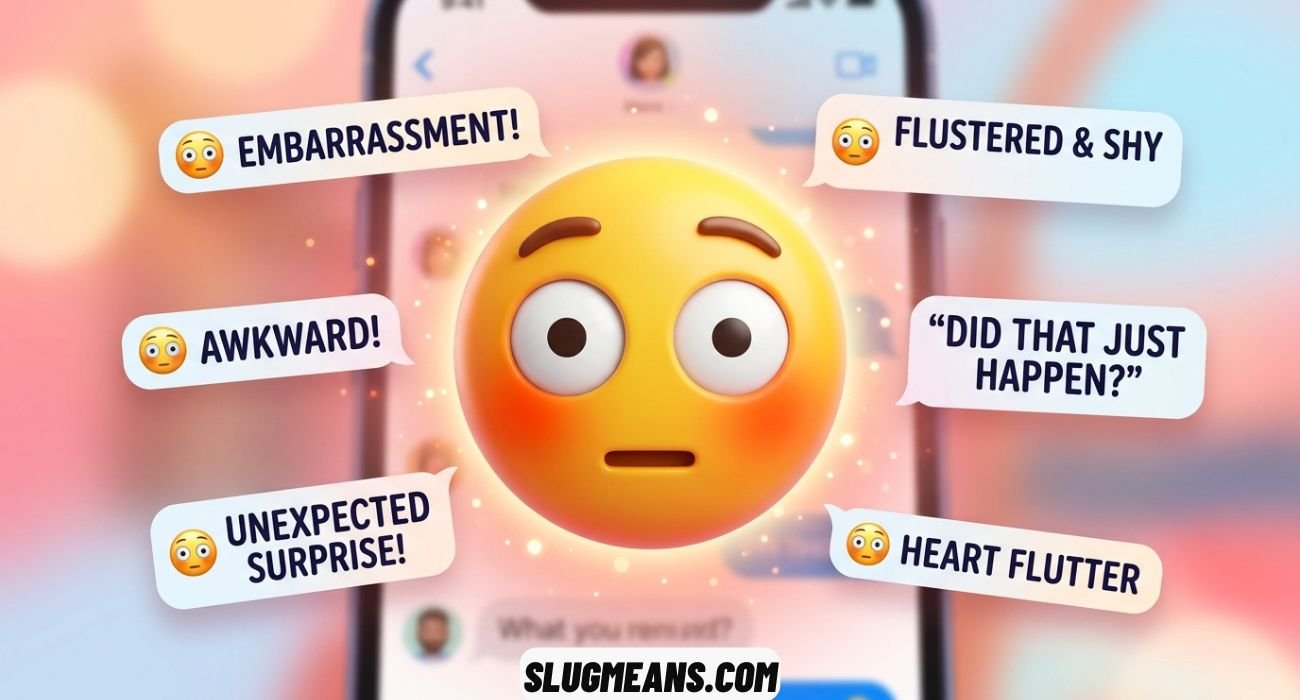
Flushed Face Emoji Meaning: What 😳 Really Means in Texts
The Flushed Face Emoji Meaning is about showing feelings like embarrassment, shyness, surprise, or blushing. It is represented by the 😳 emoji. People use it to express emotions that words cannot easily explain.
Have you ever received a message with 😳 and wondered what it really meant? Its meaning can change depending on the conversation. Learning how it is used helps you understand texts and social media better.
Today, the Flushed Face Emoji Meaning is popular on TikTok, Instagram, Snapchat, and WhatsApp. It can show flirting, awkward moments, or genuine surprise. Knowing its meaning helps you use the emoji with confidence.
What Is The Flushed Face Emoji Meaning?
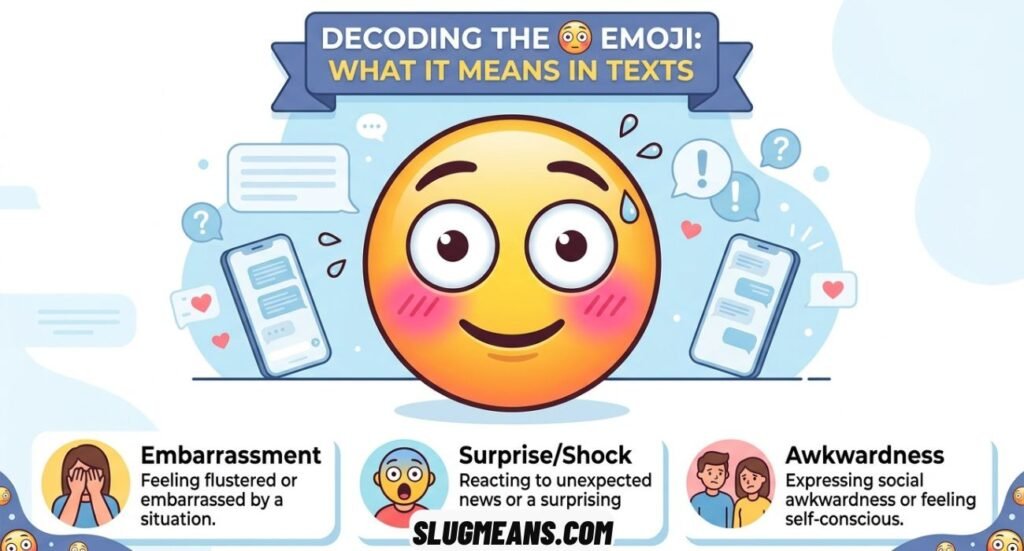
The Flushed Face Emoji Meaning refers to feelings of embarrassment, surprise, shyness, admiration, nervousness, or emotional excitement. Officially represented as 😳, this emoji shows a yellow face with wide-open eyes and red cheeks, giving the impression that someone is blushing.
Unlike many emojis with a single purpose, the 😳 emoji changes meaning depending on the conversation. A friend may send it after making a mistake, while someone flirting might use it after receiving a compliment. This flexibility is one reason it remains one of the most frequently used facial expression emojis today.
The Official Meaning of the 😳 Emoji
According to the Unicode Standard, the 😳 emoji represents a face with wide eyes and flushed cheeks. It is designed to express emotions such as embarrassment, surprise, shyness, or being emotionally overwhelmed.
Its official design is simple, but users have given it many additional meanings over time. In modern digital communication, it often represents reactions that words cannot fully capture.
Unicode Description and Emoji History
The Flushed Face Emoji was introduced as part of the Unicode emoji collection to standardize emotional expressions across digital platforms. Since its release, it has been supported by major operating systems including Apple, Google, Microsoft, Samsung, and Android.
Although each platform has a slightly different design, the overall expression remains the same:
- Red cheeks indicating blushing
- Large eyes showing surprise
- Neutral mouth suggesting speechlessness
These visual details make the emoji easy to recognize regardless of the device being used.
What the Flushed Face Emoji Represents
The 😳 emoji commonly represents several emotions, including:
- Embarrassment
- Blushing
- Awkward moments
- Surprise
- Shyness
- Flirting
- Being caught off guard
- Receiving compliments
- Feeling nervous
- Emotional excitement
The exact meaning depends entirely on the surrounding text and the relationship between the people chatting.
For example:
Example 1
Person A:
“I told everyone you have a crush.”
Person B:
“😳”
Here, the emoji clearly shows embarrassment.
Example 2
Person A:
“You look amazing today.”
Person B:
“😳❤️”
In this situation, the emoji expresses being flattered and slightly shy.
Why It Is Called the Flushed Face Emoji
The name comes from the word “flushed,” which describes cheeks turning red because of strong emotions. People naturally blush when they feel embarrassed, nervous, excited, or receive unexpected attention.
The emoji copies this real-life facial reaction, making it feel authentic and relatable in online messaging.
Flushed Face Emoji Quick Facts
Knowing a few quick facts makes it easier to understand why this emoji has become so popular worldwide.
| Feature | Details |
| Emoji | 😳 |
| Official Name | Flushed Face |
| Unicode Category | Smileys & Emotion |
| Common Meanings | Embarrassment, Surprise, Shyness, Flirting, Awkwardness |
| Most Popular Platforms | WhatsApp, Instagram, TikTok, Snapchat, Facebook, Discord |
| Tone | Positive, neutral, or playful depending on context |
Emoji Name
Its official Unicode name is Flushed Face, although many users simply call it the blushing emoji or embarrassed emoji.
Unicode Version and Release Year
The emoji became part of the Unicode emoji set over a decade ago and has remained consistently popular as emoji usage has grown worldwide.
Today, nearly every smartphone, tablet, and messaging application supports it.
Emoji Category
It belongs to the Smileys & Emotion category, alongside many other facial expression emojis that communicate human emotions without words.
Common Platforms Where It Appears
You will regularly see the 😳 emoji on:
- TikTok
- Snapchat
- Messenger
- Discord
- Telegram
- X (Twitter)
Although the artwork differs slightly between platforms, the emotional meaning stays mostly consistent.
Most Common Emotions It Expresses
People most often use the 😳 emoji to express:
- Shyness
- Embarrassment
- Flirting
- Awkward silence
- Unexpected compliments
- Nervous excitement
- Feeling exposed
- Shock mixed with admiration
This emotional flexibility explains why it appears so frequently in modern conversations.
Why Users Love This Emoji
The 😳 emoji has become a favorite because it communicates complex emotions instantly. Instead of writing a long explanation, one emoji often says everything.
It Expresses Emotions Without Words
Human communication relies heavily on facial expressions. During text messaging, those visual cues disappear.
The 😳 emoji fills that gap by showing emotions people would normally display with their face, making conversations feel warmer and more personal.
Perfect for Funny and Embarrassing Moments
Many viral memes and online jokes include the Flushed Face Emoji because it perfectly captures awkward situations.
Examples include:
- Accidentally texting the wrong person 😳
- Forgetting someone’s name 😳
- Sending a message to the family group instead of your friend 😳
In these moments, the emoji softens embarrassment with humor.
Adds Personality to Text Messages
Messages without emojis sometimes appear cold or serious.
Compare these:
“I didn’t mean that.”
“I didn’t mean that 😳”
The second message feels more genuine because the emoji adds emotional context.
Works Across Different Social Platforms
One reason for its popularity is consistency.
Whether someone uses Instagram DMs, Snapchat, WhatsApp, or Discord, most users instantly recognize the emotional message behind 😳.
This universal recognition makes it one of the safest and most effective reaction emojis available today.
The Social And Social Meaning Of Online Chats
The Flushed Face Emoji Meaning changes significantly depending on who is sending it and where the conversation happens. While the emoji always suggests a strong emotional reaction, the exact feeling depends on context.
What 😳 Means in Casual Conversations
Among friends, 😳 usually means:
- “That’s embarrassing.”
- “I wasn’t expecting that.”
- “Now I’m blushing.”
- “You caught me.”
For example:
Friend:
“I know your secret.”
Reply:
“😳”
Without typing another word, the emotional message is clear.
Flushed Face Emoji Meaning in Text Messages
In private conversations, the emoji often expresses emotions that people hesitate to write directly.
Someone may send 😳 after:
- Receiving praise
- Being teased
- Making a mistake
- Hearing unexpected news
- Getting caught doing something funny
Because texting lacks facial expressions, this emoji restores some of the emotional nuance found in face-to-face conversations.
How Friends Use It Differently Than Couples
Among friends, 😳 often means playful embarrassment.
Between romantic partners, however, the meaning changes.
It may express:
- Shy affection
- Romantic attraction
- Feeling flattered
- Being speechless
- Cute awkwardness
For example:
“I miss you.”
“😳❤️”
The emoji communicates emotion without requiring a long reply.
Why It Creates Emotional Context in Chats
Research on digital communication consistently shows that emojis help reduce misunderstandings by providing emotional signals that plain text cannot convey.
The Flushed Face Emoji is particularly effective because it mirrors a genuine human reaction—blushing. That makes conversations feel more natural, emotional, and authentic.
Meaning On Social Media Table With Examples
The Flushed Face Emoji Meaning changes slightly across different social platforms because each platform has its own communication style.
| Platform | Common Meaning | Example |
| Shyness, admiration, compliments | “You actually noticed me 😳” | |
| TikTok | Flirting, awkward humor, surprise | “That ending was wild 😳” |
| Snapchat | Being caught, embarrassed | “Don’t open my snap 😳” |
| Blushing, nervousness | “I can’t believe you remembered 😳” | |
| Shock or admiration | “That’s incredible 😳” | |
| Discord | Playful embarrassment | “Oops… my bad 😳” |
| X (Twitter) | Reaction to unexpected posts | “Well… that happened 😳” |
Why the Emoji Changes Across Platforms
Every social platform has its own culture.
On TikTok, 😳 often appears in humorous or flirtatious videos.
On Snapchat, it commonly signals embarrassment after sharing something personal.
On Instagram, users frequently pair it with compliments, selfies, and reactions to attractive photos.
Meanwhile, on Discord, gamers often use it after making a funny mistake or reacting to an unexpected moment during gameplay.
Understanding these subtle differences helps you interpret the Flushed Face Emoji Meaning correctly wherever you see it.
Different Tones Based On Context
One reason the Flushed Face Emoji Meaning is so interesting is that it changes depending on the situation. Unlike emojis with only one purpose, 😳 can express several emotions at once. The surrounding words, the relationship between the people chatting, and even the platform all influence how it is interpreted.
Learning these different meanings helps you avoid confusion and use the emoji more naturally in everyday online conversations.
Flushed Face Emoji Meaning When Flirting
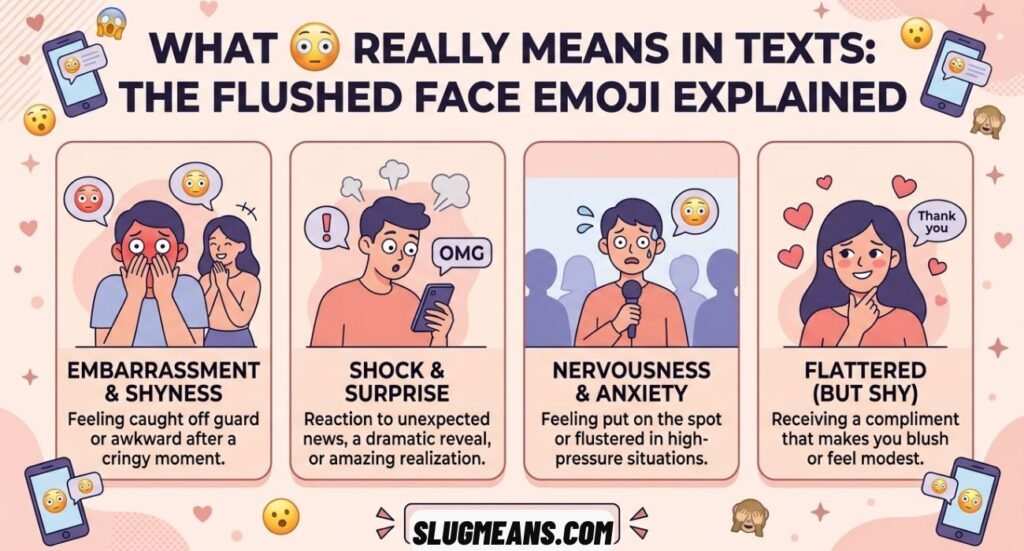
One of the most common modern uses of 😳 is in flirting. Instead of directly saying, “I’m blushing,” people simply send this emoji to show they’re feeling shy or pleasantly surprised.
It often appears after receiving a compliment, a romantic message, or a playful joke.
Examples:
Person A:
“You have the cutest smile.”
Person B:
“Aww… 😳”
In this case, the emoji shows shyness, attraction, and appreciation without sounding overly dramatic.
Another example:
Person A:
“I can’t stop thinking about you.”
Person B:
“😳❤️”
Here, the combination of emojis suggests mutual affection and bashfulness.
See Also : DSL Meaning Slang: What It Really Means Explained
Meaning When Feeling Embarrassed
The original and most widely understood Flushed Face Emoji Meaning is embarrassment.
Everyone experiences awkward moments, and the 😳 emoji is a quick way to acknowledge them.
Common situations include:
- Forgetting someone’s birthday
- Sending a message to the wrong person
- Tripping in public
- Saying something awkward
- Getting caught making a mistake
Example:
“I just waved at someone who wasn’t waving at me. 😳”
The emoji makes the story feel lighthearted rather than serious.
Meaning During Awkward Situations
Sometimes people aren’t embarrassed—they’re simply uncomfortable or unsure how to respond.
That’s where 😳 becomes especially useful.
Imagine someone unexpectedly asks:
“Do you like me?”
A simple:
“😳”
can communicate hesitation, surprise, or uncertainty better than a long explanation.
In these situations, the emoji acts almost like a pause in real conversation.
Meaning When Surprised or Shocked
The wide eyes of the emoji naturally represent surprise.
People often use 😳 after hearing unexpected news or seeing something unbelievable.
Examples:
- “You won the lottery? 😳”
- “That’s your first drawing? 😳”
- “You met your favorite celebrity? 😳”
Here, the emoji communicates admiration mixed with disbelief.
Meaning When Receiving a Compliment
Compliments can make people feel happy, shy, and slightly embarrassed at the same time.
That’s why the Flushed Face Emoji appears so often after positive comments.
Example:
“You did an amazing job on your presentation.”
“Thank you 😳”
Instead of simply saying “thanks,” the emoji shows genuine appreciation and modesty.
Meaning in Funny Conversations
Comedy and memes have given the 😳 emoji another popular role.
It now appears whenever something hilariously awkward happens.
Examples include:
- Watching an embarrassing video
- Realizing everyone heard your mistake
- Reading an unexpected plot twist
- Seeing an old photo of yourself
The emoji tells others,
“That was awkward… but also funny.”
Its versatility explains why it frequently appears in viral posts and internet humor.
Connection To Real Human Conversation
The popularity of the Flushed Face Emoji Meaning isn’t accidental. It succeeds because it imitates real human behavior.
When people feel embarrassed, nervous, or unexpectedly praised, they often blush naturally. The emoji recreates that reaction in digital form.
Instead of relying only on words, users can express subtle emotions instantly.
How 😳 Replaces Facial Expressions
During face-to-face conversations, we rely heavily on body language.
We notice:
- Smiles
- Eye contact
- Raised eyebrows
- Blushing
- Nervous laughter
These non-verbal signals disappear during text messaging.
The 😳 emoji helps replace those missing visual cues, making messages feel more human.
Compare these examples:
“I wasn’t expecting that.”
“I wasn’t expecting that 😳”
The second message sounds warmer, friendlier, and more emotional.
Why It Makes Messages Feel More Natural
Studies on digital communication have shown that emojis help readers interpret emotional tone more accurately.
Without emojis, short messages sometimes sound rude or emotionless.
For example:
“Okay.”
may sound cold.
But:
“Okay 😳”
suggests the person feels shy, surprised, or slightly embarrassed.
That tiny visual difference changes the entire conversation.
Body Language vs. Emoji Communication
| Real-Life Expression | Emoji Equivalent | Emotion |
| Blushing cheeks | 😳 | Embarrassment |
| Looking surprised | 😳 | Shock |
| Feeling shy | 😳 | Nervousness |
| Receiving praise | 😳 | Modesty |
| Being caught off guard | 😳 | Awkwardness |
Although emojis cannot completely replace face-to-face interaction, they make online conversations feel much closer to real-life communication.
Why Teens Use It More Often
Teenagers and young adults are among the biggest users of the 😳 emoji.
Their communication style often relies on visual expression rather than long written explanations.
Instead of typing several sentences, one emoji communicates an entire emotional reaction.
Popular Emoji Trends Among Gen Z
Research into emoji usage consistently shows that Gen Z prefers expressive emojis over plain text.
Among this generation, 😳 often means:
- “I’m embarrassed.”
- “You caught me.”
- “That was unexpected.”
- “I’m blushing.”
- “That person is attractive.”
Because these meanings are widely understood, conversations become quicker and more engaging.
How Teen Slang Influences Emoji Meaning
Internet slang constantly changes the way emojis are interpreted.
Today’s teens frequently combine 😳 with phrases like:
- “No way 😳”
- “Stop 😳”
- “You’re lying 😳”
- “That’s crazy 😳”
The emoji adds emotional emphasis that words alone sometimes fail to express.
Common Situations Where Teens Use 😳
Teenagers regularly use the Flushed Face Emoji in situations such as:
- Receiving compliments
- Talking about crushes
- Reacting to viral videos
- Sharing embarrassing moments
- Posting selfies
- Responding to memes
- Watching unexpected plot twists
Its flexibility makes it suitable for almost every type of casual conversation.
Differences Between Teen and Adult Usage
Although adults also use 😳, they often use it differently.
| Teens | Adults |
| Flirting | Mild embarrassment |
| Meme reactions | Genuine surprise |
| Internet humor | Modesty |
| Online trends | Friendly appreciation |
| Playful awkwardness | Professional casual chats |
Understanding these differences helps avoid misunderstanding someone’s intended emotion.
Cultural And Global Use
The Flushed Face Emoji Meaning is recognized around the world, but cultural differences sometimes influence how people interpret it.
Fortunately, the basic emotions of blushing, surprise, and embarrassment are nearly universal.
That makes 😳 one of the easiest emojis to understand internationally.
Flushed Face Emoji Meaning in the United States
In the United States, 😳 is commonly used to express:
- Embarrassment
- Flirting
- Shyness
- Being impressed
- Awkward humor
American users often include it in conversations after compliments or funny mistakes.
For example:
“You’re actually really good at this.”
“Thanks 😳”
This response feels humble and genuine rather than overly confident.
How Different Countries Interpret 😳
Although the core meaning remains similar, usage varies slightly across cultures.
In some countries, people use 😳 more frequently in romantic conversations.
Elsewhere, it’s primarily associated with surprise or embarrassment.
Social media trends also influence interpretation, especially on global platforms like TikTok, Instagram, and Discord.
Does Culture Change Emoji Meaning?
Culture changes the frequency of emoji use more than the meaning itself.
Someone from one country may use 😳 dozens of times each day, while another person uses it only during particularly emotional moments.
Regardless of location, most users immediately associate the emoji with blushing or feeling emotionally overwhelmed.
Universal Emotions Behind the Emoji
Psychologists often describe blushing as a nearly universal human response to social attention.
Because the 😳 emoji reflects that natural reaction, people from different cultures generally understand it without needing an explanation.
This universal recognition is one reason the Flushed Face Emoji continues to thrive in global digital communication.
See Also : CBFW Meaning Slang: Complete Guide
How Often It Appears In Communication
The Flushed Face Emoji Meaning has become a regular part of modern digital communication. Whether people are chatting with friends, replying to social media posts, or reacting to a funny video, 😳 appears in millions of conversations every day.
As emojis have become a universal language, the Flushed Face Emoji remains one of the most recognizable ways to express emotions like embarrassment, shyness, surprise, and nervous excitement. Its versatility allows it to fit naturally into almost any informal conversation.
Why 😳 Is Frequently Used in Daily Chats
Unlike emojis that express only one feeling, 😳 can represent multiple emotions at once. This flexibility makes it useful in a wide variety of situations.
People commonly use it when they:
- Receive an unexpected compliment.
- Feel shy after someone notices them.
- React to surprising news.
- Admit an embarrassing mistake.
- Respond to playful teasing.
- Share an awkward story.
Instead of writing a long explanation, a single emoji communicates the emotional reaction immediately.
For example:
Friend: “Everyone loved your speech.”
Reply: “Really? 😳”
The emoji tells readers the person is pleasantly surprised and a little embarrassed by the attention.
Most Common Conversations That Include It
The 😳 emoji appears most often in conversations involving emotions.
Some common examples include:
Romantic Conversations
When someone sends a sweet compliment or expresses affection, 😳 often replaces words like “I’m blushing.”
Example:
“You’re honestly the best part of my day.”
“😳❤️”
Friendly Chats
Friends use the emoji after teasing one another or sharing embarrassing stories.
Example:
“Remember when you walked into the wrong classroom?”
“Please don’t remind me 😳😂”
Family Messages
Family members sometimes use 😳 after receiving praise or when talking about funny childhood memories.
Example:
“Your graduation photo looks amazing!”
“Thanks! 😳”
Social Media Comments
The emoji frequently appears under:
- Selfies
- Achievement posts
- Funny videos
- Celebrity photos
- Viral memes
It helps users react emotionally without writing a lengthy comment.
Trends in Emoji Communication
Over the past decade, emojis have become an essential part of online messaging. Research from major keyboard and messaging platforms consistently shows that smiley emojis and facial expression emojis remain among the most-used categories worldwide.
The Flushed Face Emoji continues to stay popular because it can express several emotions at once without confusing the reader.
Unlike trend-based emojis that rise and fall in popularity, 😳 has remained relevant because feelings like embarrassment, admiration, and surprise are timeless parts of human communication.
Tips When Using The Flushed Face Emoji
Knowing the Flushed Face Emoji Meaning is only part of effective communication. Understanding when to use it is equally important.
Using the emoji naturally can make your messages friendlier, while using it incorrectly may create confusion.
Use It to Show Genuine Emotion
The best time to use 😳 is when you genuinely want to express an emotional reaction.
It works especially well when you’re:
- Feeling shy.
- Receiving praise.
- Reacting to surprising news.
- Feeling slightly embarrassed.
- Showing playful awkwardness.
Because it represents real human emotions, readers usually understand it immediately.
Avoid Using It in Formal Conversations
Although emojis have become common in business messaging, the Flushed Face Emoji is still considered informal.
Avoid using it in:
- Job applications
- Business proposals
- Academic papers
- Professional client emails
- Legal or official communication
Instead, reserve it for conversations with friends, family, classmates, or coworkers who communicate casually.
Pair It With Other Emojis for Better Meaning
Combining 😳 with other emojis can make your message even clearer.
Some popular combinations include:
| Emoji Combination | Meaning |
| 😳❤️ | Shy love or affection |
| 😳🥹 | Feeling touched or emotional |
| 😳😂 | Embarrassed but laughing |
| 😳🙈 | Extremely shy or bashful |
| 😳✨ | Feeling flattered or admired |
| 😳🤭 | Trying to hide embarrassment |
These combinations provide additional emotional context and reduce misunderstandings.
Know Your Audience Before Sending 😳
Context matters.
A close friend will likely understand your intended meaning immediately.
However, someone you’ve just met may interpret the emoji differently.
Before using 😳, consider:
- How well you know the person.
- The tone of the conversation.
- Whether the message is casual or professional.
- Cultural differences in emoji usage.
Choosing the right emoji for the situation improves communication and prevents mixed signals.
How People Interpret It Wrong
Despite its popularity, the Flushed Face Emoji Meaning is sometimes misunderstood.
Because the emoji represents several emotions, readers may assign a different meaning than the sender intended.
Fortunately, most misunderstandings can be avoided with proper context.
Common Misunderstandings
One of the biggest misconceptions is assuming 😳 always means romantic interest.
While it can indicate flirting, it often simply means:
- Embarrassment
- Surprise
- Nervousness
- Feeling exposed
- Awkwardness
For example:
“Everyone clapped for me today 😳”
This message expresses modesty, not romance.
When 😳 Is Mistaken for Fear or Sadness
Some users confuse the Flushed Face Emoji with expressions of fear because of its wide eyes.
In reality, emojis like 😨 or 😰 are better suited for fear or anxiety.
The 😳 emoji focuses more on emotional attention, blushing, or unexpected situations rather than danger or panic.
Understanding this distinction helps you choose the right emoji for your message.
Why Context Matters More Than the Emoji
The same emoji can carry completely different meanings depending on the conversation.
Consider these examples:
Example 1
“You look amazing today.”
“😳”
Meaning: Feeling flattered
Example 2
“Oops… I sent that to my boss.”
“😳”
Meaning: Embarrassment.
Example 3
“I didn’t know you could sing like that!”
“😳”
Meaning: Pleasant surprise.
The surrounding text determines how readers interpret the emoji.
How to Avoid Sending the Wrong Message
To reduce misunderstandings:
- Match the emoji to the conversation.
- Add a few words when necessary.
- Avoid using it in serious discussions.
- Consider your relationship with the other person.
- Remember that not everyone interprets emojis the same way.
A little context goes a long way toward making your message clear.
Why It Still Works Today
Many internet trends disappear after a few years, but the Flushed Face Emoji Meaning has remained relevant because it represents emotions that people experience every day.
Whether you’re 16 or 60, everyone has felt embarrassed, surprised, or shy at some point. That universal emotional connection keeps 😳 useful across generations.
Timeless Emotional Expression
Blushing is a natural human response that has existed long before smartphones.
Because the emoji mirrors this real-life facial expression, it never feels outdated.
Unlike trendy slang, genuine emotions don’t go out of style.
Fits Modern Digital Communication
Today’s conversations happen across many platforms, including:
- TikTok
- Snapchat
- Discord
- Facebook Messenger
- Telegram
The 😳 emoji fits naturally into each of these environments because it communicates feelings quickly and clearly.
In an age where people value fast, expressive messaging, emojis have become an essential part of communication.
Popular Across All Major Platforms
Although each platform designs the emoji slightly differently, its meaning remains remarkably consistent.
Whether someone uses an iPhone, Android device, Windows computer, or another operating system, readers immediately recognize the expression.
This consistency has helped the Flushed Face Emoji become one of the most trusted and widely understood reaction emojis on the internet.
Why the Flushed Face Emoji Remains Relevant
The continued success of 😳 comes down to three key reasons:
- It represents universal human emotions.
- It adapts easily to different contexts.
- It works across every major messaging platform.
As online communication continues to evolve, the Flushed Face Emoji Meaning remains simple, expressive, and instantly recognizable. It helps people communicate emotions that are often difficult to express with words alone, making it one of the most valuable emojis in modern digital conversations.
See Also : PMO Meaning in Text — The Truth Behind This Viral Slang
Flushed Face Emoji Meaning Compared With Similar Emojis
The Flushed Face Emoji Meaning becomes much easier to understand when you compare it with other popular face emojis. While many emojis look similar, each one conveys a different emotion. Choosing the right emoji helps your message sound more natural and prevents misunderstandings.
The table below highlights the key differences.
| Emoji | Primary Meaning | Best Used When | Emotional Tone |
| 😳 | Embarrassment, shyness, surprise, flirting | Receiving compliments, awkward moments | Bashful, nervous |
| 😊 | Happiness, kindness, gratitude | Friendly conversations | Warm, positive |
| 🥺 | Pleading, innocence, affection | Asking for something or showing vulnerability | Soft, emotional |
| 😅 | Relief after an awkward moment | Escaping an embarrassing situation | Humorous, relieved |
| 😬 | Nervousness, discomfort | Cringe-worthy situations | Uncomfortable |
Understanding these differences ensures you use the right emoji for the right situation.
😳 vs 😊 Smiling Face
Although both emojis are positive, they express different emotions.
The 😳 emoji suggests someone is emotionally overwhelmed or blushing, while 😊 simply shows happiness or appreciation.
Example
“You look amazing today.”
😳 = “I’m blushing.”
😊 = “Thank you.”
The first response feels shy, while the second feels cheerful.
😳 vs 🥺 Pleading Face
People sometimes confuse these emojis because both can appear in affectionate conversations.
However, their meanings are different.
The Pleading Face Emoji (🥺) usually expresses:
- Hope
- Affection
- Innocence
- Wanting a favor
Meanwhile, 😳 expresses:
- Embarrassment
- Flustered feelings
- Being caught off guard
- Blushing
Example
“Can you stay a little longer?”
🥺 = Asking sweetly.
😳 = Feeling shy after hearing something kind.
😳 vs 😅 Grinning Face With Sweat
The 😅 emoji usually means someone feels relieved after an awkward situation.
The 😳 emoji focuses on the awkward emotion itself.
Example
“I almost forgot our anniversary.”
😳 = Realizing the mistake.
😅 = Feeling relieved after fixing it.
😳 vs 😬 Grimacing Face
Although both emojis involve uncomfortable emotions, they communicate different feelings.
😬 often means:
- Cringe
- Tension
- Nervousness
- “That wasn’t good.”
😳 usually means:
- Blushing
- Surprise
- Embarrassment
- Being flattered
Choosing between them depends on whether you’re uncomfortable or simply feeling shy.
When to Choose Each Emoji
Choose 😳 when you want to express:
- Embarrassment
- Shyness
- Being flattered
- Unexpected attention
- Playful flirting
Choose another emoji if your emotion is primarily happiness, fear, relief, or sadness.
Matching the emoji to the emotion makes your messages clearer and more authentic.
Best Emoji Combinations Using 😳
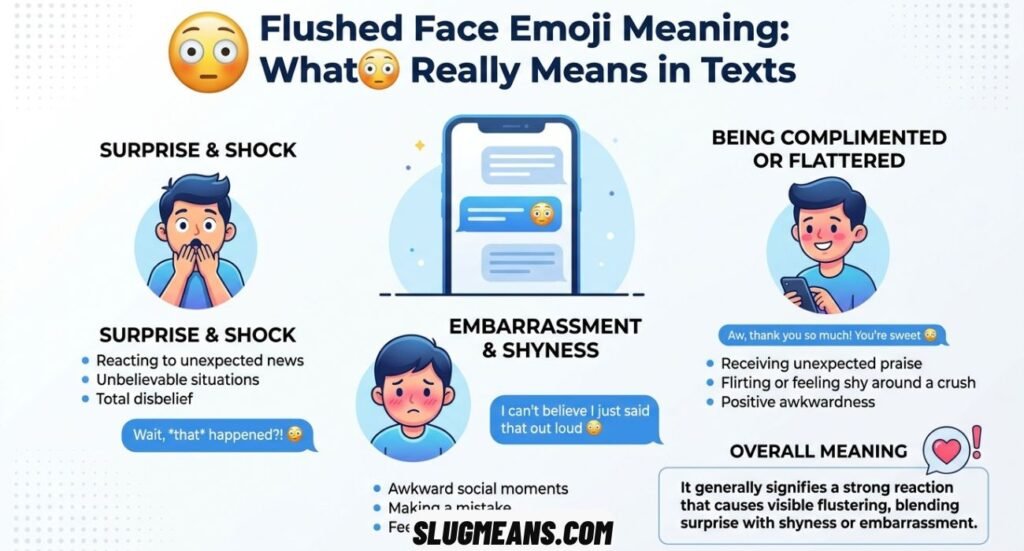
One reason the Flushed Face Emoji Meaning remains so popular is that it pairs well with many other emojis. These combinations create richer emotional expressions without adding extra words.
Here are some of the most common combinations.
😳❤️ – Shy Love
This combination expresses affection mixed with bashfulness.
It’s commonly used after:
- Romantic compliments
- Love messages
- Sweet surprises
- Anniversary wishes
Example
“You’re the best thing that’s happened to me.”
“😳❤️”
The response shows appreciation, love, and a little embarrassment.
😳😂 – Embarrassed Laughter
This pairing means:
“I can’t believe that happened.”
It’s perfect for funny mistakes.
Example
“I called my teacher ‘Mom’ today.”
“😳😂”
The laughter softens the embarrassment.
😳👉👈 – Feeling Bashful
This popular internet combination represents extreme shyness.
It often appears in memes and playful conversations.
Common meanings include:
- Being nervous
- Feeling cute
- Wanting to ask something
- Flirting awkwardly
😳🙈 – Awkward Moment
The See-No-Evil Monkey Emoji strengthens feelings of embarrassment.
It suggests:
“I wish nobody saw that.”
Example
“I accidentally liked a photo from five years ago.”
“😳🙈”
😳🔥 – Flattered or Impressed
The fire emoji changes the meaning slightly.
Together they suggest:
- Someone looks attractive.
- Something is impressive.
- Feeling excited and shy.
Example
“Your new outfit looks incredible.”
“😳🔥”
This combination is common on Instagram, TikTok, and Snapchat.
Common Examples of Flushed Face Emoji Meaning
The easiest way to understand the Flushed Face Emoji Meaning is by seeing it used in everyday conversations.
Below are some realistic examples.
In Romantic Texts
The 😳 emoji frequently appears in conversations between couples or people getting to know each other.
Example 1
Person A:
“You’re adorable.”
Person B:
“Stop… 😳❤️”
Meaning: Feeling flattered and shy.
Example 2
Person A:
“I can’t wait to see you tomorrow.”
Person B:
“Me too 😳”
Meaning: Excitement mixed with nervousness.
In Friend Chats
Friends often use 😳 after teasing each other.
Example
Friend:
“Everyone knows you secretly love that show.”
Reply:
“😳😂”
Meaning: Playful embarrassment.
In Family Conversations
Family members also use the emoji in lighthearted situations.
Example
Mom:
“I showed your baby photos to everyone.”
Reply:
“Mom!! 😳”
Meaning: Embarrassment with humor.
At School or College
Students frequently use the emoji after classroom surprises.
Example
“The teacher picked me first to present.”
“😳”
Meaning: Nervousness and surprise.
At Work (Informal Communication)
Although the emoji isn’t appropriate for formal emails, it sometimes appears in casual workplace chats.
Example
Coworker:
“Great presentation today!”
Reply:
“Thank you! 😳”
Meaning: Appreciation and modesty.
Frequently Asked Questions (FAQs)
What does the Flushed Face Emoji 😳 mean?
The Flushed Face Emoji Meaning usually represents embarrassment, shyness, surprise, nervousness, or being flattered. The exact meaning depends on the context of the conversation.
Is the Flushed Face Emoji used for flirting?
Yes. Many people use 😳 while flirting because it suggests blushing after receiving attention or a compliment. However, it can also simply express embarrassment or surprise.
What does 😳 mean from a girl?
When a girl sends 😳, it often means she feels shy, flattered, surprised, or slightly embarrassed. The intended meaning depends on the conversation and relationship.
What does 😳 mean from a guy?
When a guy uses 😳, it usually shows that he feels embarrassed, caught off guard, or appreciative of a compliment. It may also indicate playful flirting.
Is the Flushed Face Emoji positive or negative?
Most of the time, it’s a positive or neutral emoji. While it can represent awkward situations, it usually conveys genuine emotion rather than negativity.
Final Thoughts
Understanding the Flushed Face Emoji Meaning helps you communicate more naturally in today’s digital world. Although the 😳 emoji officially represents a flushed face with blushing cheeks, its real meaning depends on the conversation. It can express embarrassment, shyness, surprise, admiration, nervous excitement, or even lighthearted flirting.
Its popularity comes from its ability to mirror real human emotions. Instead of writing a long explanation, one emoji can instantly show how someone feels. Whether you’re chatting on WhatsApp, Instagram, TikTok, Snapchat, Discord, or Facebook Messenger, the 😳 emoji adds warmth, personality, and emotional context to your messages.
The key takeaway is simple: always consider the surrounding conversation before interpreting or sending the emoji. Context determines whether it means “I’m embarrassed,” “I’m flattered,” “I wasn’t expecting that,” or “You’re making me blush.” By using it thoughtfully, you can make your online conversations feel more genuine, expressive, and engaging.