What Does Establish Justice Mean? ⚖️ 2026 — Definition, Examples, and Modern Meaning
The term Establish Justice Mean creating fairness and right actions in society. It means setting rules that protect people equally. It supports honesty, equality, and moral behavior for everyone.
Justice shapes how people live together every day. Fair rules help people feel safe and respected. Without justice, trust and order slowly disappear.
The idea of Establish Justice Mean appears in law, schools, and communities. It guides leaders and citizens to act fairly. Justice helps society stay strong and peaceful.
Defining “Establish Justice”
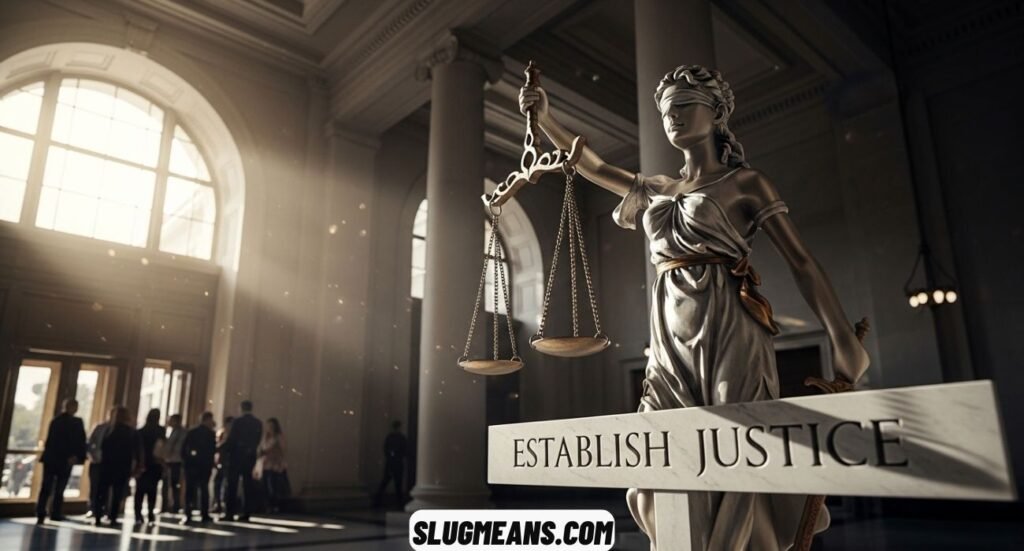
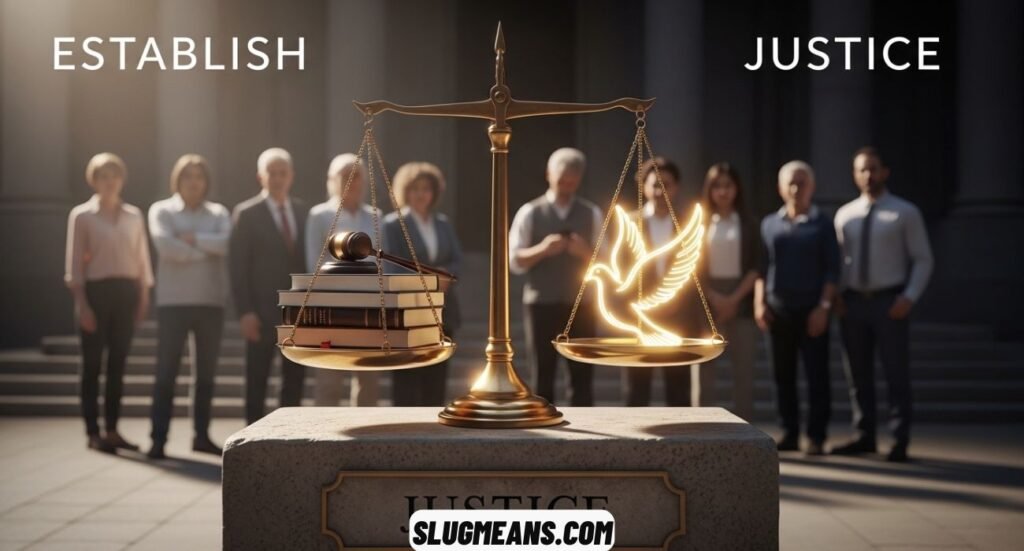
The phrase “establish justice” means creating systems and actions that ensure fairness and equality, protect rights, and promote moral righteousness in society. To establish something means to build it, secure it, and make it lasting. Justice, in its simplest form, means doing what is right and fair. When combined, the phrase refers to the effort to create conditions where fairness is not accidental but guaranteed.
In everyday use, the establish justice meaning goes beyond punishment or courts. It includes treating people fairly, respecting laws, and acting with integrity. From a broader perspective, justice involves both legal and moral justice, meaning that laws must be fair and human behavior must be ethical. In this sense, justice becomes a shared responsibility rather than only a government duty.
In the United States, justice is often discussed as part of justice in society, where laws, institutions, and individuals work together to protect rights and ensure equal treatment. Justice is therefore not just a legal rule but a living principle that guides decisions and behavior.
Historical Context of Establishing Justice
The idea of justice is ancient, but its meaning has evolved over time. Early civilizations created rules to maintain order, while later societies added moral reasoning and human rights. In American history, the concept of justice became central to national identity.
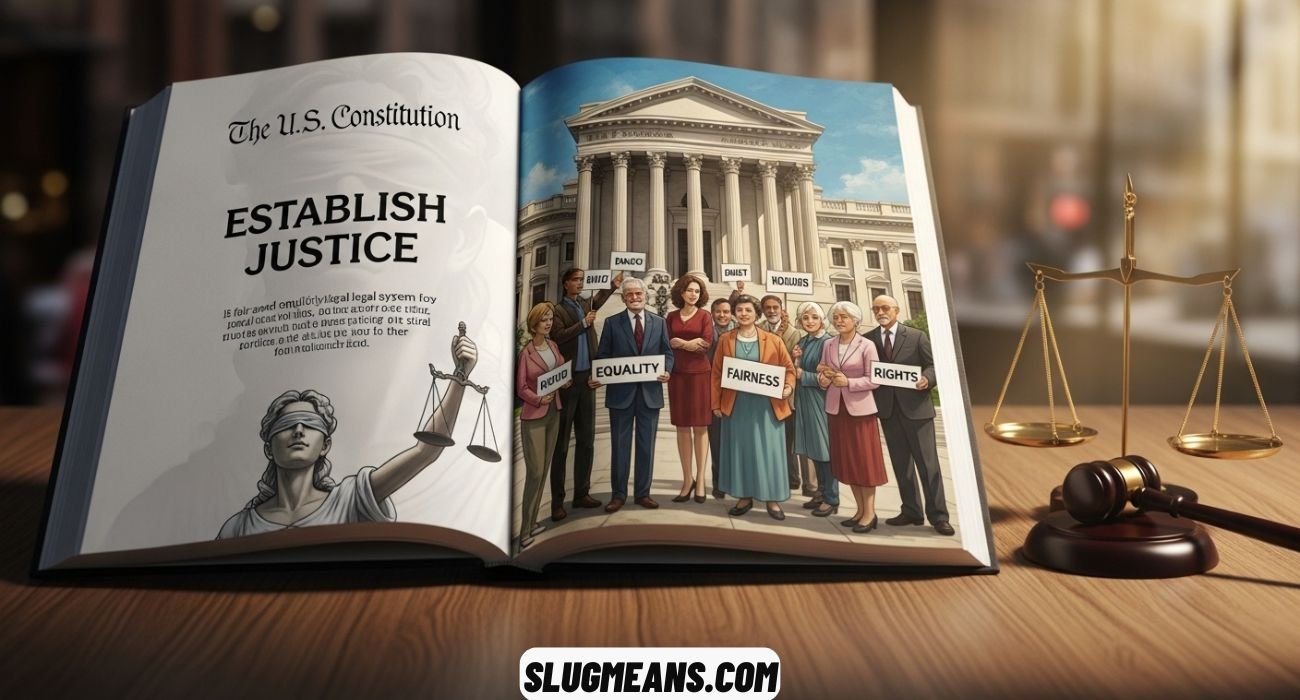
The phrase “establish justice” appears in the Preamble of the United States Constitution, showing that justice was seen as a foundational goal from the very beginning. This idea of constitutional justice emphasized building a nation based on laws rather than power or privilege.
Over time, justice expanded to include equal protection under the law, civil rights, and protections for minorities. Movements for voting rights, labor rights, and gender equality all reflect the evolving understanding that justice must apply to everyone. History shows that justice is not static; it grows as societies recognize new forms of inequality and unfairness.
Legal Perspective on Establishing Justice
From a legal viewpoint, establishing justice means creating and maintaining a fair legal system where laws are applied equally and consistently. This includes courts, lawmakers, and enforcement agencies working together to uphold the rule of law.
The justice definition in law focuses on procedures, rights, and outcomes. Courts aim to provide judicial fairness by remaining neutral and unbiased. Judges are expected to act as part of impartial courts, deciding cases based on facts and law rather than personal beliefs. At the same time, law enforcement accountability is essential to ensure that those enforcing the law do not abuse their power.
In the United States, justice also involves protecting the legal rights of citizens, including due process and access to justice. Without affordable legal help or fair treatment, justice cannot truly exist. This legal framework shows how justice is structured and enforced in practice.
Social and Moral Dimensions of Justice
Justice is not limited to courtrooms. It also has strong social and moral dimensions that influence daily life. Social justice principles focus on reducing inequality and ensuring fairness in society. This often includes debates about equity vs equality, where equality means treating everyone the same, while equity means giving people what they need to succeed.
Moral justice is about moral responsibility and ethical behavior. It asks whether actions are right or wrong, even if they are legal. For example, discrimination may be illegal, but justice also requires people to respect the dignity of individuals in everyday interactions.
Justice also means human rights protection, especially for justice for vulnerable groups such as children, minorities, and people with disabilities. In this sense, justice becomes closely connected to compassion, empathy, and shared humanity.
Establish Justice in Daily Life
Justice is not only created by governments. It is practiced daily by individuals. Justice in daily life appears when people treat others with respect, make fair choices, and speak up against unfairness. In families, schools, and workplaces, justice shapes trust and cooperation.
In professional settings, justice shows up as workplace fairness, honest communication, and equal opportunities. Fair treatment builds confidence and reduces conflict. On a personal level, justice influences how people handle disagreements, leading to peaceful conflict resolution rather than hostility.
By acting fairly in small ways, individuals contribute to larger systems of justice. This shows that justice is both personal and collective.
Why Establishing Justice Matters
Justice is essential because it creates stability and trust. Without justice, societies face corruption, inequality, and unrest. When justice is present, people feel safe, valued, and respected.
Justice strengthens democratic institutions by ensuring that power is limited and accountable. It supports justice and accountability, making leaders answerable for their actions. Justice also improves justice in decision making, helping organizations and governments choose actions that benefit everyone rather than a few.
In simple terms, justice matters because it protects people and keeps societies functioning fairly.
Justice in Governance and Leadership
In governance, justice means ruling fairly and responsibly. Justice in governance requires laws that protect rights and leaders who act with integrity. Ethical governance depends on transparency, fairness, and accountability.
Leaders who practice ethical leadership focus on serving the public rather than personal interests. This includes fair decision-making, honest communication, and respect for the law. When leaders fail to establish justice, public trust declines and institutions weaken.
Justice in leadership also means protecting freedom, ensuring fair elections, and respecting the rule of law.
Establish Justice in Business and Organizations
Justice plays a major role in business environments. Companies establish justice by ensuring equal pay, fair promotion practices, and clear rules. Accountability in organizations helps prevent abuse and corruption.
Businesses that value justice promote transparency and trust, which improves employee morale and public reputation. Ethical companies also support anti-discrimination efforts and protect workers’ rights.
When organizations act justly, they contribute to a healthier economy and society.
Philosophical Perspectives on Justice
Philosophers have long debated the meaning of justice. Classical thinkers described justice as giving each person what they deserve. Modern thinkers describe justice as fairness, focusing on equal opportunities and social cooperation.
The moral philosophy of justice explores questions about right and wrong, responsibility, and human dignity. These ideas influence modern laws and policies, shaping how justice is understood today. Studying justice theories explained helps people think critically about fairness and ethics.
Challenges in Establishing Justice
Despite its importance, justice is difficult to achieve. Bias, corruption, and inequality often stand in the way. Even fair laws can be applied unfairly if systems lack oversight.
Social divisions, economic inequality, and political conflicts also make justice harder to establish. These challenges show that justice requires constant effort, reflection, and reform.
Steps to Promote Justice Effectively
Promoting justice begins with education and awareness. Learning about rights, responsibilities, and ethics encourages civic responsibility. Communities that value fairness and dialogue are better equipped to resolve conflicts peacefully.
Institutions can promote justice through reform, transparency, and restorative justice practices that focus on healing rather than punishment. Justice is strongest when people and systems work together.
Justice Across Cultures
Justice is a universal idea, but cultures interpret it differently. Some cultures emphasize legal rules, while others focus on harmony and reconciliation. Understanding these differences helps promote cooperation and respect in a globalized world.
Despite cultural variations, justice everywhere aims to protect dignity and fairness.
Establish Justice Through Education
Education is a powerful tool for justice. Justice in education teaches students about rights, ethics, and responsibility. Schools that encourage ethical reasoning and respect help shape fair-minded citizens.
Education empowers people to understand laws, question injustice, and participate actively in society.
Justice and Technology
Technology is transforming justice systems. Justice and technology now intersect through legal technology tools, digital records, and online courts. AI in legal systems helps analyze cases faster, while digital transparency improves accountability.
At the same time, technology raises concerns about bias and privacy. Ensuring technology and accountability remains fair is one of the biggest challenges of modern justice. Online justice platforms increase access but must be carefully managed.
Custom Example Sentences Using “Establish Justice”
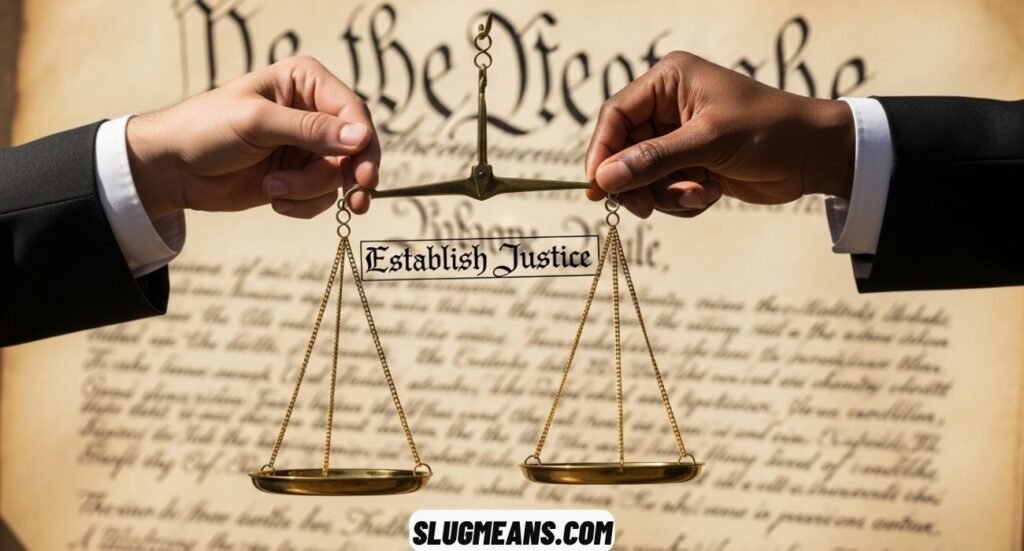
In everyday language, people use the phrase naturally. A government may pass new laws to establish justice for citizens. A company may change policies to establish justice among employees. Courts interpret laws to establish justice fairly. Community leaders work to establish justice for those who have been treated unfairly.
Key Takeaways Table
| Topic | Key Insight | Real-World Meaning |
| Definition | Justice means fairness and moral rightness | Treating people equally |
| Law | Justice depends on fair systems | Courts and rights |
| Society | Justice protects dignity | Inclusion and equality |
| Leadership | Justice builds trust | Ethical governance |
| Technology | Justice is evolving | Digital accountability |
Expert Insight
Legal philosopher Martha Nussbaum explains that justice is about recognizing the value of every human life and acting to protect it. Her work highlights how justice and human dignity are inseparable. Justice is not only about rules, but about compassion, respect, and responsibility.
Justice as the Foundation of a Fair Society
Justice acts as the backbone of a fair society by setting clear expectations for behavior and responsibility. When justice is established, people feel confident that rules apply equally to everyone. This sense of fairness encourages cooperation and reduces conflict, helping communities live together peacefully and productively.
A society without justice often struggles with inequality and mistrust. When people believe systems are unfair, they lose faith in institutions. Establishing justice restores balance by ensuring fairness, accountability, and respect, which are essential for long-term social stability and harmony.
How Laws Help Establish Justice
Laws play a critical role in establishing justice by defining rights, responsibilities, and consequences. Well-written laws guide behavior and help resolve disputes fairly. When laws are applied consistently, they protect citizens from abuse and ensure that justice is not based on power or wealth.
However, laws alone are not enough. Justice depends on how laws are enforced and interpreted. Fair courts, honest officials, and accountable enforcement are necessary to ensure laws truly serve justice rather than becoming tools of oppression or inequality.
See Also : Glazing Slang Explained: Why Everyone’s Saying It and What It Means
Justice and Equality in Everyday Life
Justice is not limited to courts or governments; it appears in everyday actions and decisions. Treating people fairly, listening to different perspectives, and respecting boundaries are all forms of justice. These daily behaviors build trust and strengthen relationships at home, work, and in communities.
When people practice justice daily, they help create a culture of respect. Small acts of fairness can prevent misunderstandings and reduce tension. Over time, these actions contribute to a more balanced and supportive society where everyone feels valued.
The Moral Side of Establishing Justice
Justice has a strong moral dimension that goes beyond legality. Moral justice asks whether actions are right or wrong, even when laws are silent. It encourages honesty, empathy, and responsibility, guiding people to act fairly even when no one is watching.
Moral justice also emphasizes human dignity. It reminds individuals and institutions that every person deserves respect. By aligning actions with moral values, societies move closer to fairness and compassion, strengthening both personal character and collective ethics.
Justice in Leadership and Decision Making
Leaders play a major role in establishing justice through their decisions and behavior. Fair leaders listen to different voices, follow rules, and prioritize the common good. Their actions set examples that influence organizations, governments, and communities.
When leaders act unjustly, trust quickly fades. Fair decision making builds confidence and cooperation. Ethical leadership ensures that power is used responsibly, helping institutions function smoothly and maintain public support over time.
Why Justice Matters for Democracy
Justice is essential for democracy because it protects rights and limits power. Democratic systems depend on fair laws, free participation, and equal treatment. When justice is established, citizens feel empowered to engage in civic life without fear or discrimination.
Without justice, democracy weakens. Corruption, favoritism, and inequality undermine public trust. Establishing justice ensures accountability and transparency, allowing democratic institutions to serve the people effectively and fairly.
Justice in the Workplace Environment
Workplace justice focuses on fairness, respect, and equal opportunity. Employees expect fair pay, unbiased evaluations, and safe environments. When justice exists at work, people feel motivated, valued, and confident in their roles.
Unfair workplaces often face low morale and high conflict. Establishing justice improves teamwork and productivity. Clear policies, honest communication, and accountability help organizations create balanced and respectful professional environments.
Challenges That Make Justice Difficult
Establishing justice is challenging because societies are complex and diverse. Bias, discrimination, and unequal access to resources can prevent fair treatment. Even well-designed systems may fail if human behavior interferes with fairness.
Economic inequality and political pressure also complicate justice. Conflicting interests can lead to unfair decisions. Overcoming these challenges requires constant effort, awareness, and commitment to ethical principles at all levels of society.
The Role of Education in Promoting Justice
Education helps people understand their rights and responsibilities. By teaching fairness, ethics, and critical thinking, schools prepare individuals to recognize injustice and respond constructively. Education empowers people to participate actively in society.
Justice-focused education also encourages empathy and respect. When students learn about equality and dignity, they grow into responsible citizens. Over time, education becomes a powerful tool for building fairer and more inclusive communities.
See Also : YN Slang Meaning: Discover How and Why Everyone Uses It
Justice in a Changing Digital World
Technology is reshaping how justice is delivered and experienced. Digital tools increase access to information and make systems more transparent. Online platforms allow people to report unfair treatment and demand accountability more easily.
However, technology also brings risks, such as bias in automated systems. Establishing justice in the digital age requires careful oversight. When used responsibly, technology can strengthen fairness and improve access to justice for many people.
FAQs
What is the meaning of establish justice?
To establish justice means to create and uphold fairness, equality, and moral rightness in society. It ensures laws and decisions protect rights and treat everyone fairly.
What does it mean to obtain justice?
To obtain justice means receiving a fair and rightful outcome after a wrong or dispute. It involves accountability, correction, and respect for legal or moral rights.
What does it mean to establish justice in the gate?
To establish justice in the gate means making fair and honest judgments in places of authority. Traditionally, it refers to leaders or judges ensuring fairness where public decisions are made.
What does “We the People” mean?
“We the People” means that government authority comes from the citizens themselves. It highlights unity, shared responsibility, and popular sovereignty in a democratic system.
Final Thoughts
The phrase Establish Justice Mean creating fairness, honesty, and right action in society. People use laws, rules, and moral values to protect rights and treat everyone equally. Justice supports peace and order. It helps people trust schools, courts, and leaders. When justice exists, society becomes safer and more respectful for all people.
When people understand what Establish Justice Mean, they act with care and responsibility. They follow rules, respect others, and support fairness in daily life. Justice helps communities grow strong and united. It guides leaders, teachers, and students to make fair choices. Justice builds a better future for everyone.